
Fasting is the most powerful visualization of the fact that “one does not live by bread alone, but by every word that comes from the mouth of God.” (Matt 4:4). Fasting isn’t a matter of choice but a divine mandate. There is no “if” in fasting rather only “when”. For instance Christ advises; “When you fast, put oil on your head and wash your face, so that your fasting may be seen not by others but by your Father who is in secret; and your Father who sees in secret will reward you.” (Matt 6:17-18). It’s about “when you fast” and not “if you fast”. This underscores the obligatory nature of fasting.
In modern parlance, fasting may also be conceived as an act of rebellion in a culture of consumerism. Fr. John Behr observes;
“Through the practice of fasting, controlling the stomach, one does not simply reduce one’s dietary intake to the minimum possible but instead learns to break through the hypocrisy of the stomach, to know that one will not die if one does not eat as one has become accustomed to do. The hypocrisy of the stomach is not located in the bodily organ itself but in the mind’s relation to the stomach.”
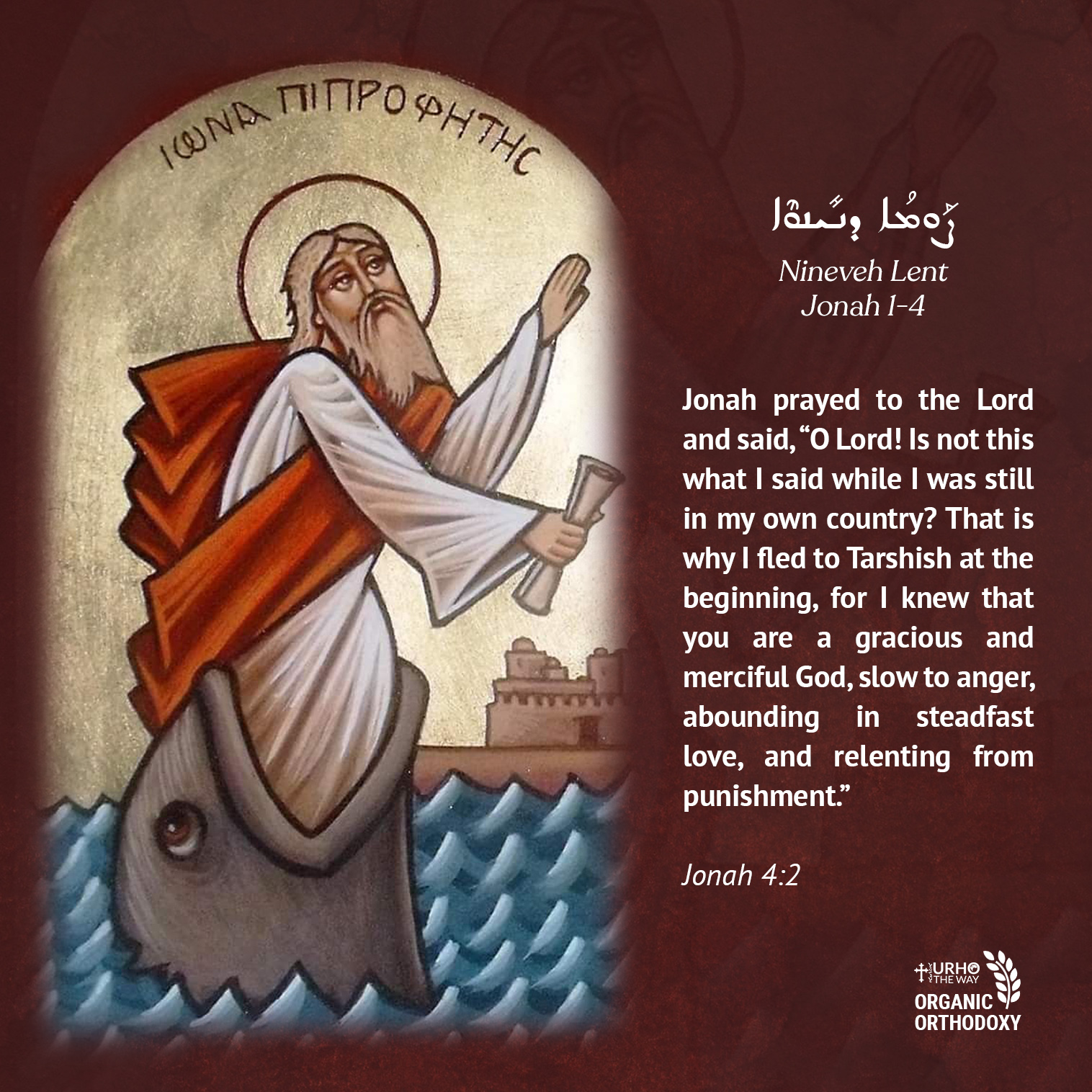
As we journey through the Nineveh Lent, we are introduced by Jonah to a God who transcends human exclusivity. Jonah is a highly perceptive theologian who knows God really well. For he says; “I knew that you are a gracious and merciful God, slow to anger, abounding in steadfast love, and relenting from punishment.” (Jonah 4:2).
However he finds the universal love of God to be scandalous; “Let not the foreigner who has joined himself to the Lord say “The Lord will surely separate me from his people” and let not the eunuch say “Behold, I am a dry tree” (Is 56:3).
The discomfort felt by Jonah when the Ninevites are saved encompasses our askance view of salvation. We want salvation to be partial instead of universal. We are delighted in a Pyrrhic victory the cost of which is borne by a certain number of damned. Such a view is not just deeply revolting but greatly vicious. It’s surely against the fundamental premise of our faith. Moses prayed to the Lord; “But now, please forgive their sin—but if not, then blot me out of the book you have written.” (Ex 32:32). Salvation isn’t competitive rather cooperative. Therefore Chad Bird remarks;
“Jonah is the patron saint of all those scandalized by the audacious mercy of a God who says “I forgive you” when the world screams, “Punish”.
One of the basic traits of being alive is the ability to surprise. Jonah’s God is the one who surprises and therefore is truly alive. The book of Jonah shatters our expectations for in it we must be prepared to expect the unexpected. Thus Yvone Sherwood reckons;
“In the strange counter – intuitive world that is the book of Jonah; a prophet can run away from God; Assyrians, epitome of wickedness, can be inspired by a five-word oracle and repent in dust and ashes. The plot can go anywhere.”
As we observe this Fast, we are summoned to encounter an unconventional God who baffles us by His unreasonable compassion and scandalous mercy. I conclude with a hymn of St. Ephrem;
“Who taught the Ninevites to Fast?
Who made known to the Ninevites
These hidden divine mysteries?
That fasting was able to remit
The stern decree of God?
Jonah did not give them this information,
For he feared lest they should be pardoned ;
Jonah had proclaimed to the Ninevites,
That the stern decree was true.
The Ninevites believed Jonah’s words,
But made his sentence of no effect;
For they recognized a distinction,”
Between God and man;
That man was but as man,
Whereas God was gracious.
They saw that the prophet was severe,
They concluded that God was gentle.
They argued not against him who was severe,
But they sought the favour of the Gracious;
They attributed justice to the prophet,
But goodness to God.”
Blessed Fast !
~ Dayroyo Fr. Basil
 Urho, The Way