
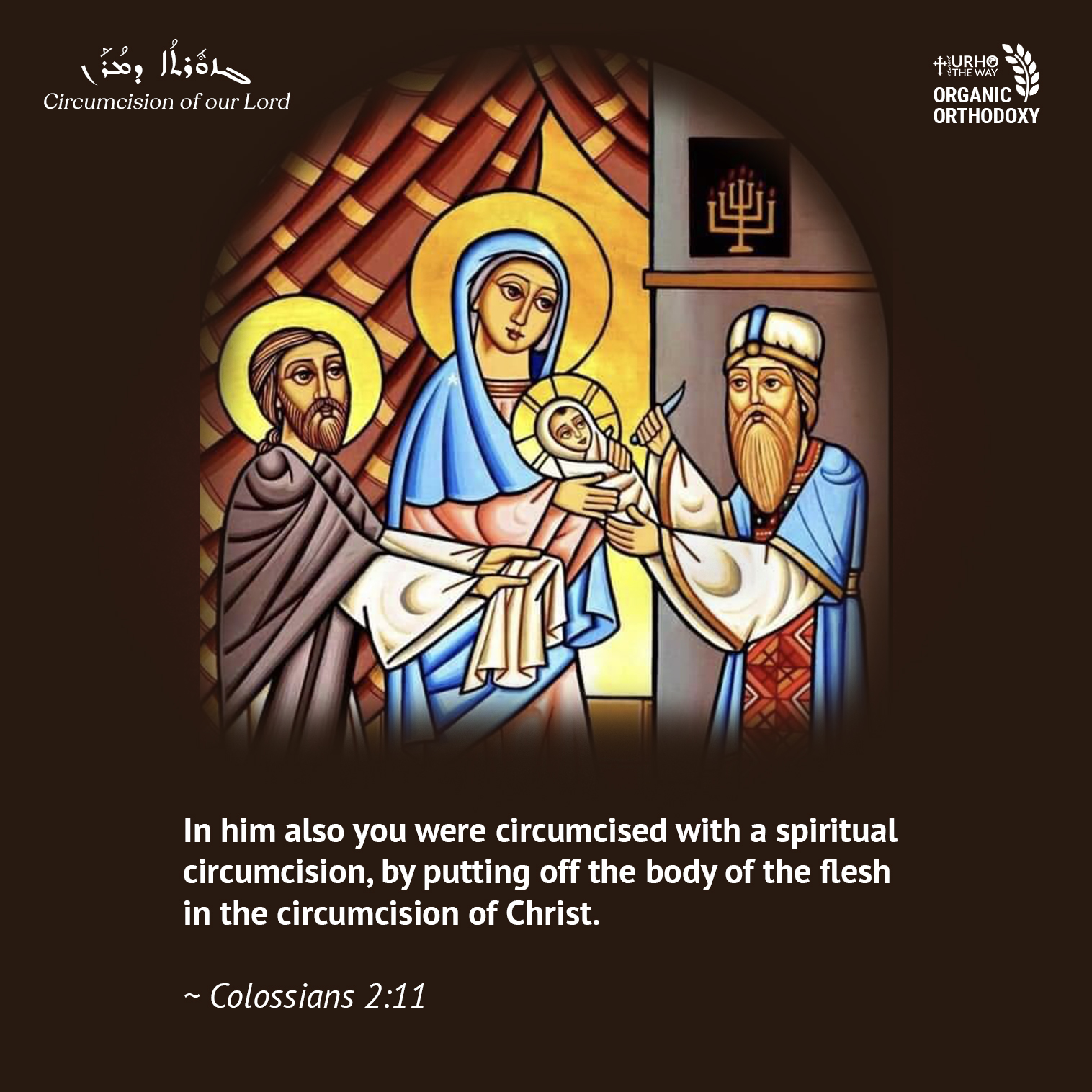
The literary world records circumcision as “the most ancient religious ceremony there is among men.” Circumcision isn’t exclusive to the Jews but was practiced by the natives of Africa, Americas, Australasia and Polynesia. It is still widely practiced in Islam. Circumcision is not even exclusive to men. There are societies which circumcise women too. The circumcision of women is first attested in Egypt in the Hellenistic period corroborated by a papyrus document from 163BCE, a petition written in Greek by an Egyptian monk at the temple of Serapis in Memphis. However Jews never circumcised women.
The legal tradition of Judaism never sacramentalized circumcision. It was done so by popular piety and esoteric mysticism in the high Middle Ages. For Jews, circumcision probably functioned as an ethnic marker to an extent but it neither determined their Jewishness nor did circumcision acquire the status of a covenant because Jewish women were not circumcised and God cannot establish a covenant solely with men. To solve this quandary and sound more inclusive, attempts were later made to covenantal(ize) circumcision by elevating the menstrual blood and parturient blood of women to the blood of circumcision of men. This argument has been received with swaying consensus.
Circumcision was never meant to be a covenant in the first place. It was just a sign of the covenant; “God said to Abraham, every male among you shall be circumcised…and it shall be a sign of the covenant between you and me” (Gen 17:11). Jesus Christ has always been the covenant of God (Heb. 8 & 9).
The Dialogue of Simon and Theophilus (Altercatio Simonis et Theophili) is a 5th cent. Latin Christian text furnishing a dialogue between Simon, a Jew and Theophilus, a Christian. In it Theophilus remarks on the circumcision of Christ; “For if Christ had not been circumcised, how would you believe me today or the prophets, who say that Christ came from the seed of David? Circumcision is in fact a sign of race, not of salvation (circumcision enim signum est generis, non salutis).”
Theophilus also comments on the dual status of Abraham i.e. an uncircumcised believer and a circumcised believer presaging the universal nature of the Church, “showing that two peoples would come into the faith of Christ: one would come having been circumcised and one would come still having the foreskin.” Therefore we infer that Christ is the antitype of Abraham who being uncircumcised and circumcised is the Father of Jews and Gentiles alike.
Ambrosiaster a 4th cent. shadowy figure in his Liber quaestionnum (Book of Questions) appropriates; “Isaac was promised as a type of Christ (figura Christi). For God said to him: ‘in your seed all nations will be blessed’ (Gen 22:18); this is Christ. Indeed that faith which Abraham received was restored by Christ, with the result that “in the seed of Abraham” (which is Christ) “all nations will be blessed.” Such was Abraham’s promise. Therefore circumcision was the sign of the promised Son—that is, Christ. At His birth it was fitting for the sign of the promise (signum promissionis) to cease.”
Christ has totally obliterated circumcision by scrupulously observing it. By subjecting His body to the Law Christ has corporally consummated the Law. Christ through His blood has united humanity which was divided by circumcision (Gal. 3:28).
Christ says; “I have not come to abolish the Law and the prophets but to fulfill” (Matt. 5:17). The Greek word employed for ‘fulfill’ is πληρῶσαι (plerosai) – which means to ‘fill unto the brim’. We can no longer fill something which has already been filled to the brim by Christ Himself. Therefore Christ renders any more observance of the Law moot and counterindicative. Thus St. Paul warns us; “If you let yourselves be circumcised, Christ will be of no benefit to you” (Gal 5:2).
I conclude with the words of St. Athanasius; “For not in the Law did Christ render the devil and the demons powerless, nor did He effect salvation through it: but in the Cross. So the demons do not look upon the Law with fear and trembling, but rather when they see the Cross they tremble and flee, and they are rendered powerless and chased away.”
~ Dayroyo Fr. Basil
 Urho, The Way