
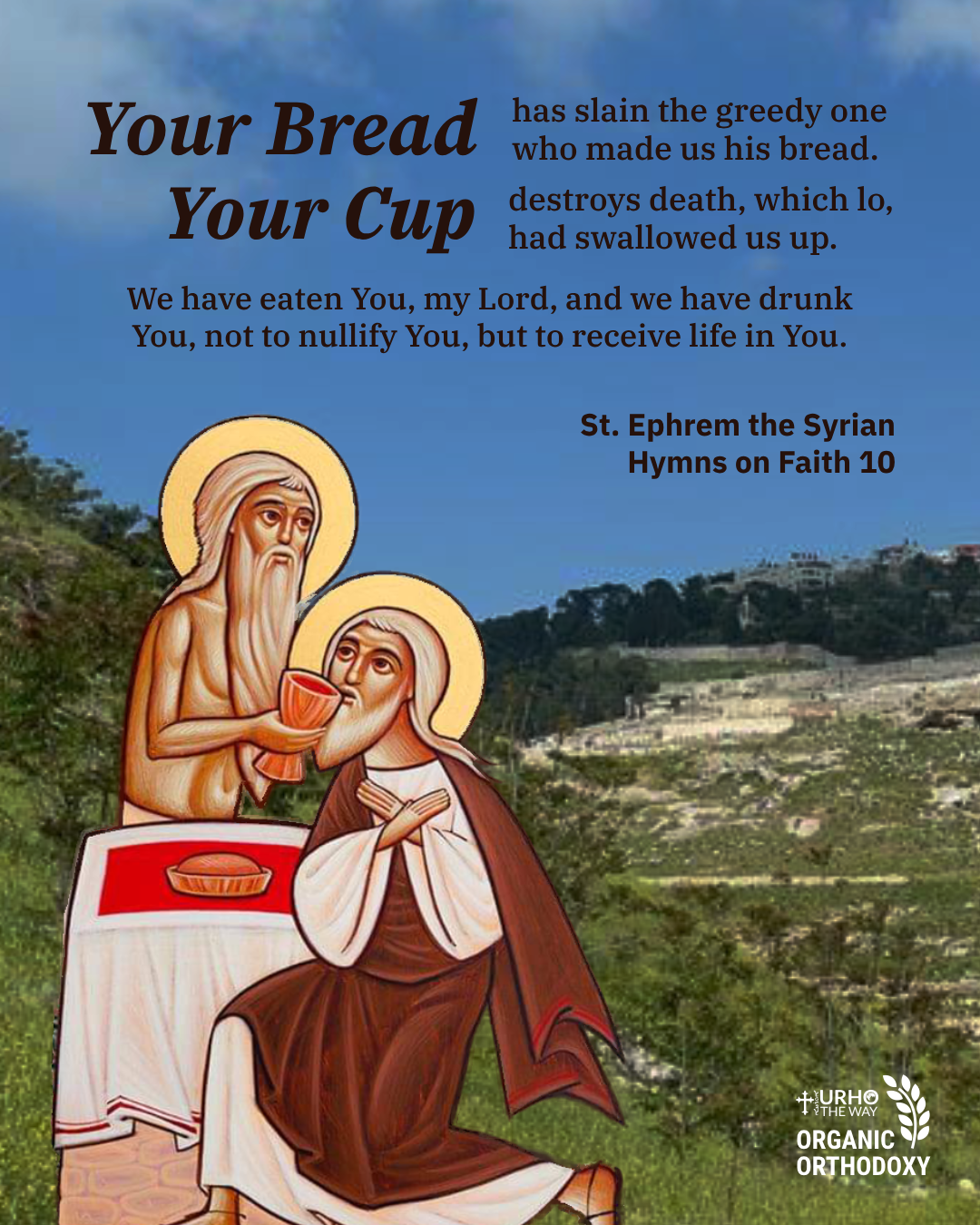
What is that prime irreducible reason we come to Church for?
It is to eat and drink our Lord and our Saviour Jesus Christ, the Son of God. Yet how many, including priests, do so? Everything else that happens in the Church is secondary. St. Ignatius of Antioch in his Epistle to the Ephesians remarks; “𝘐𝘧 𝘢𝘯𝘺𝘰𝘯𝘦 𝘪𝘴 𝘯𝘰𝘵 𝘸𝘪𝘵𝘩𝘪𝘯 𝘵𝘩𝘦 𝘴𝘢𝘯𝘤𝘵𝘶𝘢𝘳𝘺, 𝘩𝘦 𝘭𝘢𝘤𝘬𝘴 𝘵𝘩𝘦 𝘣𝘳𝘦𝘢𝘥 𝘰𝘧 𝘎𝘰𝘥.”
Just as we must go to a well to quench our thirst despite the earth being 70% water so also we must go to the Church to consume God despite His omnipresence. The ability to hold and consume God were honours deprived not only to the prophets but even angels. They fervidly desired what we take for granted. How many of us are at least conscious of this privilege let alone take it seriously?
One of the 𝘚𝘦𝘥𝘳𝘦 of the Holy Qurbono enunciates this distinguished fortune of ours;
“𝘛𝘩𝘦 𝘏𝘰𝘭𝘺 𝘚𝘱𝘪𝘳𝘪𝘵 𝘧𝘭𝘪𝘦𝘴 𝘴𝘸𝘪𝘧𝘵𝘭𝘺, 𝘪𝘯𝘷𝘪𝘴𝘪𝘣𝘭𝘺 𝘢𝘯𝘥 𝘳𝘦𝘴𝘵𝘴 𝘶𝘱𝘰𝘯 𝘵𝘩𝘪𝘴 𝘌𝘶𝘤𝘩𝘢𝘳𝘪𝘴𝘵 𝘢𝘯𝘥 𝘱𝘶𝘳𝘪𝘧𝘪𝘦𝘴 𝘪𝘵, 𝘸𝘩𝘪𝘭𝘦 𝘵𝘩𝘦 𝘢𝘯𝘨𝘦𝘭𝘴 𝘸𝘢𝘵𝘤𝘩 𝘸𝘪𝘵𝘩 𝘵𝘩𝘦𝘪𝘳 𝘧𝘪𝘦𝘳𝘺, 𝘪𝘯𝘤𝘰𝘳𝘱𝘰𝘳𝘦𝘢𝘭 𝘢𝘯𝘥 𝘴𝘶𝘣𝘵𝘭𝘦 𝘦𝘺𝘦𝘴. 𝘓𝘰𝘳𝘥! 𝘗𝘳𝘢𝘪𝘴𝘦 𝘵𝘰 𝘺𝘰𝘶 𝘧𝘰𝘳 𝘮𝘢𝘬𝘪𝘯𝘨 𝘮𝘦 𝘸𝘰𝘳𝘵𝘩𝘺 𝘵𝘰 𝘦𝘯𝘵𝘦𝘳 𝘺𝘰𝘶𝘳 𝘮𝘰𝘴𝘵 𝘩𝘰𝘭𝘺 𝘱𝘭𝘢𝘤𝘦 𝘸𝘩𝘪𝘤𝘩 𝘦𝘷𝘦𝘯 𝘵𝘩𝘦 𝘢𝘯𝘨𝘦𝘭𝘴 𝘥𝘦𝘴𝘪𝘳𝘦 𝘵𝘰 𝘭𝘰𝘰𝘬 𝘶𝘱𝘰𝘯.”
Alas! We get to be participants where angels stand as mere onlookers; at times divested of that opportunity as well.
Prophet Isaiah was the one who came closest to this privilege.
“𝘛𝘩𝘦𝘯 𝘰𝘯𝘦 𝘰𝘧 𝘵𝘩𝘦 𝘴𝘦𝘳𝘢𝘱𝘩𝘪𝘮 𝘧𝘭𝘦𝘸 𝘵𝘰 𝘮𝘦 𝘸𝘪𝘵𝘩 𝘢 𝘭𝘪𝘷𝘦 𝘤𝘰𝘢𝘭 𝘪𝘯 𝘩𝘪𝘴 𝘩𝘢𝘯𝘥, 𝘸𝘩𝘪𝘤𝘩 𝘩𝘦 𝘩𝘢𝘥 𝘵𝘢𝘬𝘦𝘯 𝘸𝘪𝘵𝘩 𝘵𝘰𝘯𝘨𝘴 𝘧𝘳𝘰𝘮 𝘵𝘩𝘦 𝘢𝘭𝘵𝘢𝘳. 𝘞𝘪𝘵𝘩 𝘪𝘵 𝘩𝘦 𝘵𝘰𝘶𝘤𝘩𝘦𝘥 𝘮𝘺 𝘮𝘰𝘶𝘵𝘩 𝘢𝘯𝘥 𝘴𝘢𝘪𝘥, “𝘚𝘦𝘦, 𝘵𝘩𝘪𝘴 𝘩𝘢𝘴 𝘵𝘰𝘶𝘤𝘩𝘦𝘥 𝘺𝘰𝘶𝘳 𝘭𝘪𝘱𝘴; 𝘺𝘰𝘶𝘳 𝘨𝘶𝘪𝘭𝘵 𝘪𝘴 𝘵𝘢𝘬𝘦𝘯 𝘢𝘸𝘢𝘺 𝘢𝘯𝘥 𝘺𝘰𝘶𝘳 𝘴𝘪𝘯 𝘢𝘵𝘰𝘯𝘦𝘥 𝘧𝘰𝘳.” (𝘐𝘴 6:6-7)
St. Ephrem comments;
“𝘛𝘩𝘦 𝘚𝘦𝘳𝘢𝘱𝘩 𝘤𝘰𝘶𝘭𝘥 𝘯𝘰𝘵 𝘵𝘰𝘶𝘤𝘩 𝘵𝘩𝘦 𝘧𝘪𝘳𝘦’𝘴 𝘤𝘰𝘢𝘭 𝘸𝘪𝘵𝘩 𝘩𝘪𝘴 𝘧𝘪𝘯𝘨𝘦𝘳𝘴, 𝘵𝘩𝘦 𝘤𝘰𝘢𝘭 𝘰𝘯𝘭𝘺 𝘫𝘶𝘴𝘵 𝘵𝘰𝘶𝘤𝘩𝘦𝘥 𝘐𝘴𝘢𝘪𝘢𝘩’𝘴 𝘮𝘰𝘶𝘵𝘩; 𝘵𝘩𝘦 𝘚𝘦𝘳𝘢𝘱𝘩 𝘥𝘪𝘥 𝘯𝘰𝘵 𝘩𝘰𝘭𝘥 𝘪𝘵, 𝘐𝘴𝘢𝘪𝘢𝘩 𝘥𝘪𝘥 𝘯𝘰𝘵 𝘤𝘰𝘯𝘴𝘶𝘮𝘦 𝘪𝘵, 𝘣𝘶𝘵 𝘰𝘶𝘳 𝘓𝘰𝘳𝘥 𝘩𝘢𝘴 𝘢𝘭𝘭𝘰𝘸𝘦𝘥 𝘶𝘴 𝘵𝘰 𝘥𝘰 𝘣𝘰𝘵𝘩!”
Furthermore, even King David ardently yearned for the living water offered by Christ (John 4:10).
“𝘋𝘢𝘷𝘪𝘥 𝘴𝘢𝘪𝘥 𝘭𝘰𝘯𝘨𝘪𝘯𝘨𝘭𝘺, ‘𝘖𝘩, 𝘵𝘩𝘢𝘵 𝘴𝘰𝘮𝘦𝘰𝘯𝘦 𝘸𝘰𝘶𝘭𝘥 𝘨𝘪𝘷𝘦 𝘮𝘦 𝘸𝘢𝘵𝘦𝘳 𝘵𝘰 𝘥𝘳𝘪𝘯𝘬 𝘧𝘳𝘰𝘮 𝘵𝘩𝘦 𝘸𝘦𝘭𝘭 𝘰𝘧 𝘉𝘦𝘵𝘩𝘭𝘦𝘩𝘦𝘮 𝘵𝘩𝘢𝘵 𝘪𝘴 𝘣𝘺 𝘵𝘩𝘦 𝘨𝘢𝘵𝘦!’ 𝘛𝘩𝘦𝘯 𝘵𝘩𝘦 𝘵𝘩𝘳𝘦𝘦 𝘣𝘳𝘰𝘬𝘦 𝘵𝘩𝘳𝘰𝘶𝘨𝘩 𝘵𝘩𝘦 𝘤𝘢𝘮𝘱 𝘰𝘧 𝘵𝘩𝘦 𝘗𝘩𝘪𝘭𝘪𝘴𝘵𝘪𝘯𝘦𝘴 𝘢𝘯𝘥 𝘥𝘳𝘦𝘸 𝘸𝘢𝘵𝘦𝘳 𝘧𝘳𝘰𝘮 𝘵𝘩𝘦 𝘸𝘦𝘭𝘭 𝘰𝘧 𝘉𝘦𝘵𝘩𝘭𝘦𝘩𝘦𝘮 𝘵𝘩𝘢𝘵 𝘸𝘢𝘴 𝘣𝘺 𝘵𝘩𝘦 𝘨𝘢𝘵𝘦, 𝘢𝘯𝘥 𝘵𝘩𝘦𝘺 𝘣𝘳𝘰𝘶𝘨𝘩𝘵 𝘪𝘵 𝘵𝘰 𝘋𝘢𝘷𝘪𝘥. 𝘉𝘶𝘵 𝘋𝘢𝘷𝘪𝘥 𝘸𝘰𝘶𝘭𝘥 𝘯𝘰𝘵 𝘥𝘳𝘪𝘯𝘬 𝘰𝘧 𝘪𝘵; 𝘩𝘦 𝘱𝘰𝘶𝘳𝘦𝘥 𝘪𝘵 𝘰𝘶𝘵 𝘵𝘰 𝘵𝘩𝘦 𝘓𝘰𝘳𝘥 𝘢𝘯𝘥 𝘴𝘢𝘪𝘥, ‘𝘔𝘺 𝘎𝘰𝘥 𝘧𝘰𝘳𝘣𝘪𝘥 𝘵𝘩𝘢𝘵 𝘐 𝘴𝘩𝘰𝘶𝘭𝘥 𝘥𝘰 𝘵𝘩𝘪𝘴. 𝘊𝘢𝘯 𝘐 𝘥𝘳𝘪𝘯𝘬 𝘵𝘩𝘦 𝘣𝘭𝘰𝘰𝘥 𝘰𝘧 𝘵𝘩𝘦𝘴𝘦 𝘮𝘦𝘯?’” (1 𝘊𝘩𝘳𝘰𝘯.11: 17-19)
That David refused to drink the water reveals that his thirst was for something greater i.e. Christ Himself (John 5:35; 7:37). St. Jacob of Serug puts these words on the lips of David;
“𝘐 𝘸𝘪𝘭𝘭 𝘥𝘳𝘪𝘯𝘬 𝘸𝘢𝘵𝘦𝘳 𝘮𝘪𝘹𝘦𝘥 𝘸𝘪𝘵𝘩 𝘣𝘭𝘰𝘰𝘥 𝘰𝘧 𝘵𝘩𝘦 𝘚𝘰𝘯 𝘰𝘧 𝘎𝘰𝘥. 𝘐 𝘥𝘰 𝘯𝘰𝘵 𝘸𝘢𝘯𝘵 𝘵𝘰 𝘥𝘳𝘪𝘯𝘬 𝘸𝘢𝘵𝘦𝘳 𝘸𝘪𝘵𝘩 𝘩𝘶𝘮𝘢𝘯 𝘣𝘭𝘰𝘰𝘥; 𝘵𝘩𝘦𝘳𝘦 𝘪𝘴 𝘯𝘰 𝘭𝘪𝘧𝘦 𝘧𝘰𝘳 𝘵𝘩𝘦 𝘰𝘯𝘦 𝘸𝘩𝘰 𝘥𝘳𝘪𝘯𝘬𝘴 𝘸𝘢𝘵𝘦𝘳 𝘸𝘪𝘵𝘩 𝘩𝘶𝘮𝘢𝘯 𝘣𝘭𝘰𝘰𝘥. 𝘚𝘪𝘯𝘤𝘦 𝘪𝘵 𝘪𝘴 𝘎𝘰𝘥 𝘸𝘩𝘰 𝘨𝘪𝘷𝘦𝘴 𝘭𝘪𝘧𝘦 𝘵𝘰 𝘩𝘶𝘮𝘢𝘯𝘪𝘵𝘺.”
One must also not overlook the specifications of David’s request. Firstly, he demands water not from any place but Bethlehem (the birthplace of our Lord) and secondly categorically from a well rather than a fountain or spring. This is because the primary source of water in wells is rain. St. Jacob of Serug observes;
“𝘏𝘦 𝘸𝘢𝘴 𝘯𝘰𝘵 𝘢𝘴𝘬𝘪𝘯𝘨 𝘧𝘰𝘳 𝘸𝘢𝘵𝘦𝘳 𝘵𝘩𝘢𝘵 𝘤𝘰𝘮𝘦𝘴 𝘶𝘱 𝘧𝘳𝘰𝘮 𝘢 𝘴𝘱𝘳𝘪𝘯𝘨, 𝘣𝘶𝘵 𝘳𝘢𝘵𝘩𝘦𝘳 𝘧𝘰𝘳 𝘴𝘰𝘮𝘦 𝘰𝘧 𝘵𝘩𝘦 𝘸𝘢𝘵𝘦𝘳 𝘵𝘩𝘢𝘵 𝘥𝘦𝘴𝘤𝘦𝘯𝘥𝘴 𝘧𝘳𝘰𝘮 𝘵𝘩𝘦 𝘥𝘸𝘦𝘭𝘭𝘪𝘯𝘨 𝘱𝘭𝘢𝘤𝘦𝘴 𝘰𝘧 𝘥𝘪𝘷𝘪𝘯𝘪𝘵𝘺.”
Christ, the bridegroom refers to His bride as the “𝘸𝘦𝘭𝘭 𝘰𝘧 𝘭𝘪𝘷𝘪𝘯𝘨 𝘸𝘢𝘵𝘦𝘳”(Song of Solomon 4:15). The Church is the well of living water. Those who drink from it shall never thirst which means they shall no longer be slaves to the desires, passions and urges of the flesh.
The Liturgy of the Church identifies the Holy Qurbono as ܣܰܡ ܚܰܝ̈ܶܐ (𝘴𝘢𝘮 𝘩𝘢𝘺𝘦, Medicine of Life or Living Medicine). We sing in the Qolo of Tuesday Matins (𝘚𝘩’𝘩𝘪𝘮𝘰);
“𝘗𝘳𝘢𝘪𝘴𝘦 𝘵𝘰 𝘵𝘩𝘦 𝘈𝘯𝘰𝘪𝘯𝘵𝘦𝘥 𝘰𝘯𝘦, 𝘸𝘩𝘰 𝘴𝘢𝘵 𝘣𝘺 𝘵𝘩𝘦 𝘸𝘦𝘭𝘭 𝘢𝘯𝘥 𝘶𝘯𝘥𝘦𝘳 𝘵𝘩𝘦 𝘱𝘳𝘦𝘵𝘦𝘹𝘵 𝘰𝘧 𝘸𝘢𝘵𝘦𝘳 𝘤𝘢𝘶𝘨𝘩𝘵 𝘵𝘩𝘦 𝘚𝘢𝘮𝘢𝘳𝘪𝘵𝘢𝘯 𝘸𝘰𝘮𝘢𝘯. 𝘏𝘦 𝘢𝘴𝘬𝘦𝘥 𝘸𝘢𝘵𝘦𝘳 𝘰𝘧 𝘩𝘦𝘳 𝘢𝘯𝘥 𝘴𝘩𝘦 𝘥𝘪𝘥 𝘯𝘰𝘵 𝘨𝘪𝘷𝘦 𝘪𝘵 𝘵𝘰 𝘏𝘪𝘮, 𝘢𝘯𝘥 𝘏𝘦 𝘤𝘢𝘶𝘴𝘦𝘥 𝘵𝘰 𝘧𝘭𝘰𝘸 𝘢 𝘧𝘰𝘶𝘯𝘵𝘢𝘪𝘯 𝘰𝘧 𝘵𝘩𝘦 𝘮𝘦𝘥𝘪𝘤𝘪𝘯𝘦 𝘰𝘧 𝘭𝘪𝘧𝘦 𝘢𝘯𝘥 𝘲𝘶𝘦𝘯𝘤𝘩𝘦𝘥 𝘩𝘦𝘳 𝘵𝘩𝘪𝘳𝘴𝘵, -𝘏-𝘏-, 𝘢𝘯𝘥 𝘣𝘺 𝘵𝘩𝘦 𝘣𝘭𝘰𝘰𝘥 𝘧𝘳𝘰𝘮 𝘏𝘪𝘴 𝘴𝘪𝘥𝘦 𝘏𝘦 𝘴𝘢𝘷𝘦𝘥 𝘵𝘩𝘦 𝘊𝘩𝘶𝘳𝘤𝘩 𝘢𝘯𝘥 𝘩𝘦𝘳 𝘤𝘩𝘪𝘭𝘥𝘳𝘦𝘯.”
Thus Holy Qurbono is the medicine for the sick and not a meed for the saints (Mk 2:17). As St. Ephrem further confirms; “𝘞𝘩𝘰𝘦𝘷𝘦𝘳 𝘵𝘢𝘬𝘦𝘴 𝘵𝘩𝘦 𝘌𝘶𝘤𝘩𝘢𝘳𝘪𝘴𝘵, 𝘵𝘢𝘬𝘦𝘴 𝘵𝘩𝘦 𝘮𝘦𝘥𝘪𝘤𝘪𝘯𝘦 𝘰𝘧 𝘭𝘪𝘧𝘦.”
So next time think twice before walking out of the Church without partaking in the Divine Mysteries which are administered not on the basis of merit but sheer grace.
~ 𝐃𝐚𝐲𝐫𝐨𝐲𝐨 𝐅𝐫. 𝐁𝐚𝐬𝐢𝐥
 Urho, The Way