
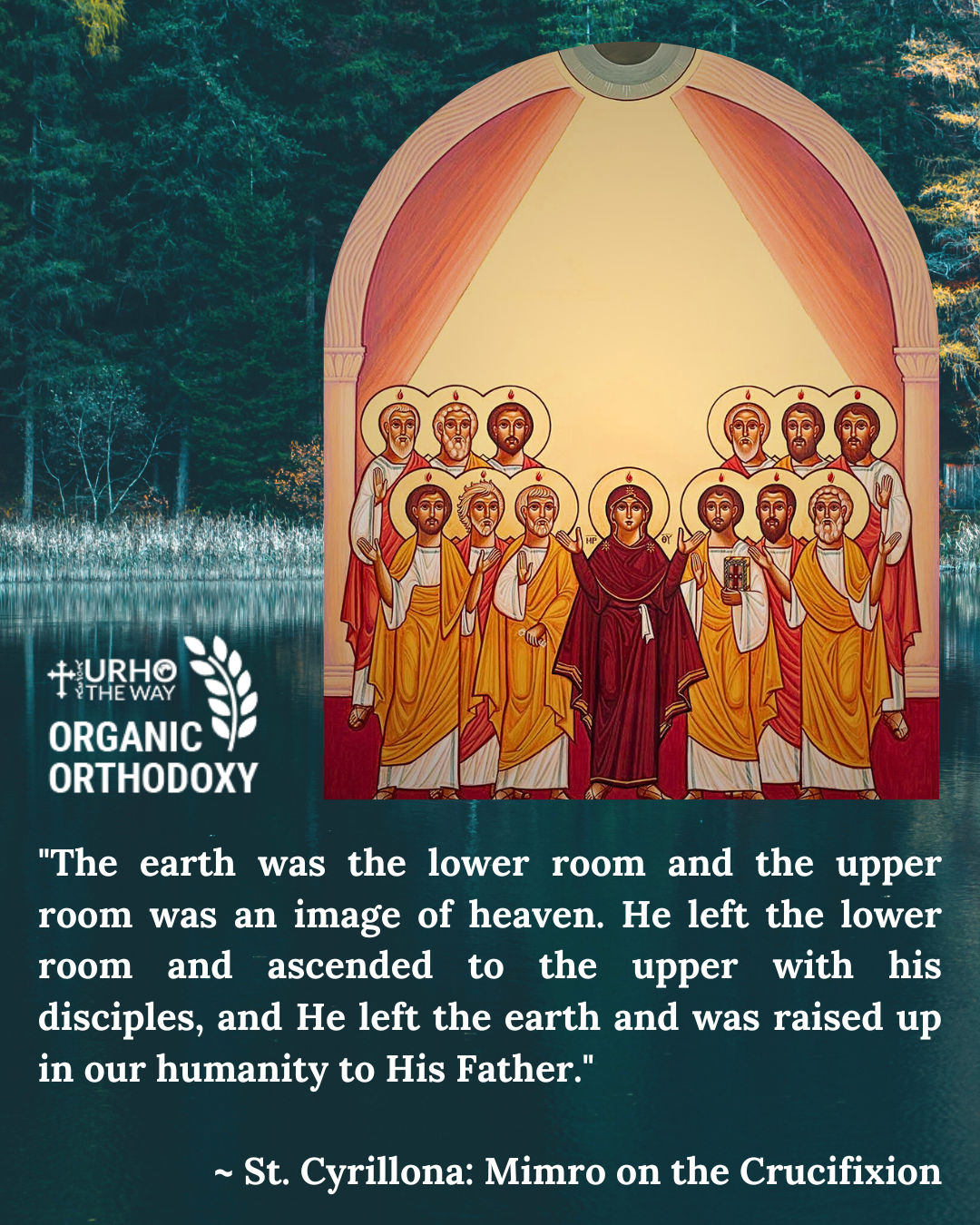
Interpreting Acts 2:1 in the light of 1:12-14, the liturgical tradition and patristic heritage of the Church identify the Upper Room (ὑπερῷον) as the locale of the outpouring of the Holy Spirit. St. Jacob of Serug assigns enormous value to the Upper Room and designates it a School and Treasury of Arms. He remarks;
“𝘖 𝘜𝘱𝘱𝘦𝘳 𝘙𝘰𝘰𝘮…𝘵𝘩𝘦 𝘚𝘱𝘪𝘳𝘪𝘵 𝘮𝘢𝘥𝘦 𝘺𝘰𝘶 𝘢 𝘴𝘤𝘩𝘰𝘰𝘭 𝘧𝘰𝘳 𝘵𝘩𝘦 𝘴𝘰𝘯𝘴 𝘰𝘧 𝘵𝘩𝘦 𝘭𝘪𝘨𝘩𝘵 𝘢𝘯𝘥 𝘵𝘩𝘦𝘺 𝘩𝘢𝘷𝘦 𝘭𝘦𝘢𝘳𝘯𝘦𝘥 𝘧𝘳𝘰𝘮 𝘺𝘰𝘶 𝘵𝘩𝘦 𝘴𝘱𝘦𝘦𝘤𝘩 𝘰𝘧 𝘵𝘩𝘦 𝘯𝘢𝘵𝘪𝘰𝘯𝘴 𝘢𝘯𝘥 𝘵𝘩𝘦𝘪𝘳 𝘵𝘰𝘯𝘨𝘶𝘦𝘴…𝘠𝘰𝘶 𝘣𝘦𝘤𝘢𝘮𝘦 𝘢𝘯 𝘢𝘳𝘮𝘰𝘶𝘳𝘺 𝘵𝘰 𝘵𝘩𝘦 𝘈𝘱𝘰𝘴𝘵𝘭𝘦𝘴 𝘢𝘯𝘥 𝘵𝘩𝘦𝘺 𝘤𝘭𝘰𝘵𝘩𝘦𝘥 𝘧𝘳𝘰𝘮 𝘺𝘰𝘶 𝘵𝘩𝘦 𝘱𝘰𝘸𝘦𝘳 𝘰𝘧 𝘵𝘩𝘦 𝘚𝘱𝘪𝘳𝘪𝘵 𝘵𝘰 𝘵𝘳𝘦𝘢𝘥 𝘶𝘯𝘥𝘦𝘳𝘧𝘰𝘰𝘵 𝘵𝘩𝘦 𝘸𝘪𝘭𝘥 𝘣𝘦𝘪𝘯𝘨𝘴…𝘠𝘰𝘶 𝘣𝘦𝘤𝘢𝘮𝘦 𝘢 𝘱𝘰𝘴𝘴𝘦𝘴𝘴𝘰𝘳 𝘰𝘧 𝘵𝘳𝘦𝘢𝘴𝘶𝘳𝘦𝘴 𝘧𝘰𝘳 𝘵𝘩𝘦 𝘱𝘦𝘰𝘱𝘭𝘦𝘴, 𝘢𝘯𝘥 𝘵𝘩𝘦 𝘳𝘦𝘨𝘪𝘰𝘯𝘴 𝘵𝘩𝘢𝘵 𝘸𝘦𝘳𝘦 𝘪𝘯 𝘯𝘦𝘦𝘥 𝘣𝘦𝘤𝘢𝘮𝘦 𝘦𝘯𝘳𝘪𝘤𝘩𝘦𝘥 𝘣𝘺 𝘺𝘰𝘶.”
The Upper Room is also conferred with the honour of Christ instituting the Holy Eucharist (Mk 14:15), washing the feet of His disciples (John 13:1-12) and the Holy Spirit descending on the Apostles as cloven tongues of fire (Acts 2:3) and teaching them everything that was there to know. One of which was to prepare the Myron (Chrism). Moses Bar Kepha writes;
“𝘐𝘯 𝘵𝘩𝘦 𝘜𝘱𝘱𝘦𝘳 𝘙𝘰𝘰𝘮, 𝘵𝘩𝘦 𝘏𝘰𝘭𝘺 𝘚𝘱𝘪𝘳𝘪𝘵 𝘵𝘢𝘶𝘨𝘩𝘵 𝘵𝘩𝘦𝘮 𝘵𝘰 𝘮𝘢𝘬𝘦 𝘵𝘩𝘦 𝘔𝘺𝘳𝘰𝘯 𝘸𝘩𝘦𝘯 𝘏𝘦 𝘥𝘸𝘦𝘭𝘵 𝘶𝘱𝘰𝘯 𝘵𝘩𝘦𝘮 𝘪𝘯 𝘵𝘩𝘦 𝘧𝘰𝘳𝘮 𝘰𝘧 𝘵𝘩𝘦 𝘵𝘰𝘯𝘨𝘶𝘦𝘴 𝘰𝘧 𝘧𝘪𝘳𝘦, 𝘢𝘯𝘥 𝘵𝘩𝘦𝘳𝘦 𝘏𝘦 𝘵𝘢𝘶𝘨𝘩𝘵 𝘵𝘩𝘦 𝘈𝘱𝘰𝘴𝘵𝘭𝘦𝘴 𝘮𝘢𝘯𝘺 𝘰𝘵𝘩𝘦𝘳 𝘵𝘩𝘪𝘯𝘨𝘴 𝘢𝘭𝘴𝘰 𝘵𝘰 𝘥𝘰. 𝘛𝘩𝘪𝘴 𝘪𝘴 𝘦𝘷𝘪𝘥𝘦𝘯𝘵 𝘧𝘳𝘰𝘮 𝘸𝘩𝘢𝘵 𝘰𝘶𝘳 𝘓𝘰𝘳𝘥 𝘩𝘢𝘥 𝘴𝘢𝘪𝘥 𝘵𝘰 𝘵𝘩𝘦 𝘈𝘱𝘰𝘴𝘵𝘭𝘦𝘴 𝘢𝘣𝘰𝘶𝘵 𝘵𝘩𝘦 𝘏𝘰𝘭𝘺 𝘚𝘱𝘪𝘳𝘪𝘵; ‘𝘧𝘰𝘳 𝘏𝘦 𝘸𝘪𝘭𝘭 𝘵𝘢𝘬𝘦 𝘸𝘩𝘢𝘵 𝘪𝘴 𝘮𝘪𝘯𝘦 𝘢𝘯𝘥 𝘴𝘩𝘰𝘸 𝘪𝘵 𝘵𝘰 𝘺𝘰𝘶’ (𝘑𝘰𝘩𝘯 16:14), 𝘢𝘯𝘥 ‘𝘏𝘦 𝘸𝘪𝘭𝘭 𝘵𝘦𝘢𝘤𝘩 𝘺𝘰𝘶 𝘦𝘷𝘦𝘳𝘺𝘵𝘩𝘪𝘯𝘨’ (𝘑𝘰𝘩𝘯 14:26).”
In the Upper Room of Mysteries, the Apostles (and by extension the Church) become the treasurers of the treasury of the Holy Trinity. The Qolo of Pentecost Matins affirms;
“𝘐 𝘱𝘳𝘦𝘢𝘤𝘩 𝘵𝘩𝘦 𝘵𝘳𝘶𝘵𝘩 𝘰𝘧 𝘔𝘺 𝘓𝘰𝘳𝘥, 𝘵𝘩𝘦 𝘊𝘩𝘶𝘳𝘤𝘩 𝘤𝘳𝘪𝘦𝘴 𝘢𝘭𝘰𝘶𝘥. ‘𝘐 𝘩𝘢𝘷𝘦 𝘬𝘦𝘱𝘵 𝘵𝘩𝘦 𝘛𝘳𝘶𝘦 𝘍𝘢𝘪𝘵𝘩 𝘵𝘩𝘢𝘵 𝘵𝘩𝘦 𝘚𝘱𝘪𝘳𝘪𝘵 𝘵𝘢𝘶𝘨𝘩𝘵 𝘮𝘦. 𝘐 𝘳𝘦𝘤𝘦𝘪𝘷𝘦𝘥 𝘪𝘵 𝘪𝘯 𝘵𝘩𝘦 𝘜𝘱𝘱𝘦𝘳 𝘙𝘰𝘰𝘮. 𝘐 𝘨𝘭𝘰𝘳𝘪𝘧𝘺 𝘢𝘯𝘥 𝘱𝘳𝘢𝘪𝘴𝘦 𝘠𝘰𝘶, 𝘖 𝘓𝘰𝘳𝘥! 𝘐 𝘤𝘰𝘯𝘧𝘦𝘴𝘴 𝘵𝘩𝘦 𝘍𝘢𝘵𝘩𝘦𝘳, 𝘚𝘰𝘯, 𝘢𝘯𝘥 𝘏𝘰𝘭𝘺 𝘚𝘱𝘪𝘳𝘪𝘵, 𝘛𝘩𝘳𝘦𝘦 𝘗𝘦𝘳𝘴𝘰𝘯𝘴 𝘣𝘶𝘵 𝘰𝘯𝘦 𝘌𝘴𝘴𝘦𝘯𝘤𝘦, 𝘵𝘩𝘦 𝘓𝘰𝘳𝘥 𝘰𝘧 𝘨𝘭𝘰𝘳𝘺!’”
The Upper Room resembles the Tower of Babel. If in the latter the tongues were confused, in the former the tongues were divided. We associate the confusion of tongues at Babel with punishment. However, both Babel and Pentecost were acts of grace engendered by the same Teacher for the propagation of the Truth i.e. Christ Himself. St Jacob of Serug observes;
“𝘐𝘧 𝘵𝘩𝘦𝘪𝘳 𝘵𝘰𝘯𝘨𝘶𝘦𝘴 𝘩𝘢𝘥 𝘯𝘰𝘵 𝘣𝘦𝘦𝘯 𝘤𝘰𝘯𝘧𝘶𝘴𝘦𝘥 𝘣𝘺 𝘮𝘦𝘳𝘤𝘺, 𝘶𝘯𝘵𝘪𝘭 𝘥𝘦𝘢𝘵𝘩 𝘵𝘩𝘦𝘺 𝘸𝘰𝘶𝘭𝘥 𝘯𝘰𝘵 𝘩𝘢𝘷𝘦 𝘭𝘦𝘧𝘵 𝘵𝘩𝘦 𝘭𝘢𝘯𝘥 𝘵𝘩𝘢𝘵 𝘵𝘩𝘦𝘺 𝘭𝘰𝘷𝘦𝘥…𝘐𝘧 𝘏𝘦 𝘩𝘢𝘥 𝘨𝘪𝘷𝘦𝘯 𝘏𝘪𝘴 𝘎𝘰𝘰𝘥 𝘕𝘦𝘸𝘴 𝘵𝘰 𝘵𝘩𝘦 𝘸𝘰𝘳𝘭𝘥 𝘪𝘯 𝘢 𝘴𝘪𝘯𝘨𝘭𝘦 𝘭𝘢𝘯𝘨𝘶𝘢𝘨𝘦 𝘰𝘯𝘭𝘺 𝘢 𝘴𝘪𝘯𝘨𝘭𝘦 𝘱𝘦𝘰𝘱𝘭𝘦 𝘸𝘰𝘶𝘭𝘥 𝘩𝘢𝘷𝘦 𝘳𝘦𝘤𝘦𝘪𝘷𝘦𝘥 𝘪𝘵 𝘵𝘰 𝘣𝘦 𝘮𝘢𝘥𝘦 𝘥𝘪𝘴𝘤𝘪𝘱𝘭𝘦𝘴; 𝘣𝘶𝘵 𝘯𝘰𝘸 𝘵𝘩𝘢𝘵 𝘏𝘦 𝘩𝘢𝘴 𝘨𝘪𝘷𝘦𝘯 𝘪𝘵 𝘢𝘣𝘶𝘯𝘥𝘢𝘯𝘵𝘭𝘺 𝘪𝘯 𝘢𝘭𝘭 𝘵𝘰𝘯𝘨𝘶𝘦𝘴, 𝘢𝘭𝘭 𝘱𝘦𝘰𝘱𝘭𝘦𝘴 𝘰𝘧 𝘵𝘩𝘦 𝘦𝘢𝘳𝘵𝘩 𝘩𝘢𝘷𝘦 𝘭𝘰𝘷𝘪𝘯𝘨𝘭𝘺 𝘭𝘰𝘯𝘨𝘦𝘥 𝘧𝘰𝘳 𝘪𝘵.”
The commissioning of the Apostles also happens in the Upper Room transforming the place into a springboard of migration while upholding its absolute necessity. St. Cyrillona in his Mimro on the Eucharist places these words on the lips of Christ;
“𝘎𝘰 𝘧𝘰𝘳𝘵𝘩 𝘪𝘯 𝘫𝘰𝘺 𝘧𝘳𝘰𝘮 𝘵𝘩𝘦 𝘶𝘱𝘱𝘦𝘳 𝘳𝘰𝘰𝘮 𝘢𝘯𝘥 𝘦𝘯𝘵𝘦𝘳 𝘪𝘯𝘵𝘰 𝘤𝘳𝘦𝘢𝘵𝘪𝘰𝘯 𝘢𝘴 𝘮𝘦𝘳𝘤𝘩𝘢𝘯𝘵𝘴. 𝘗𝘳𝘰𝘤𝘭𝘢𝘪𝘮 𝘮𝘦 𝘵𝘩𝘳𝘰𝘶𝘨𝘩𝘰𝘶𝘵 𝘵𝘩𝘦 𝘦𝘢𝘳𝘵𝘩 𝘢𝘯𝘥 𝘨𝘪𝘷𝘦 𝘮𝘦 𝘵𝘰 𝘦𝘢𝘵 𝘵𝘰 𝘵𝘩𝘦 𝘩𝘶𝘮𝘢𝘯 𝘳𝘢𝘤𝘦.”
Finally, it is in the Upper Room, that the consummation of baptism (the baptism with Spirit and fire) – as promised by St. John the Baptist (Matt. 3:11) and Christ Himself (Acts 1:5) – occurs. St. Jacob of Serug notes;
“𝘐𝘯 𝘺𝘰𝘶 (𝘜𝘱𝘱𝘦𝘳 𝘙𝘰𝘰𝘮) 𝘸𝘢𝘴 𝘢𝘤𝘤𝘰𝘮𝘱𝘭𝘪𝘴𝘩𝘦𝘥 𝘵𝘩𝘢𝘵 𝘱𝘳𝘰𝘮𝘪𝘴𝘦 𝘰𝘧 𝘣𝘢𝘱𝘵𝘪𝘴𝘮; 𝘧𝘰𝘳 𝘪𝘯 𝘺𝘰𝘶 𝘸𝘦𝘳𝘦 𝘢𝘭𝘭 𝘵𝘩𝘦 𝘥𝘪𝘴𝘤𝘪𝘱𝘭𝘦𝘴 𝘣𝘢𝘱𝘵𝘪𝘻𝘦𝘥 𝘸𝘪𝘵𝘩 𝘏𝘰𝘭𝘺 𝘚𝘱𝘪𝘳𝘪𝘵 𝘢𝘯𝘥 𝘧𝘪𝘳𝘦.”
Through the words of St. Philoxenus of Mabbug one may conceive the Upper Room as a womb too;
“𝘐𝘵 𝘢𝘱𝘱𝘦𝘢𝘳𝘴 𝘵𝘩𝘢𝘵 𝘵𝘩𝘦 𝘮𝘢𝘯 𝘰𝘧 𝘎𝘰𝘥 𝘦𝘹𝘱𝘦𝘳𝘪𝘦𝘯𝘤𝘦𝘴 𝘵𝘩𝘳𝘦𝘦 𝘣𝘪𝘳𝘵𝘩𝘴: 𝘵𝘩𝘦 𝘧𝘪𝘳𝘴𝘵, 𝘧𝘳𝘰𝘮 𝘵𝘩𝘦 𝘸𝘰𝘮𝘣 𝘪𝘯𝘵𝘰 𝘤𝘳𝘦𝘢𝘵𝘪𝘰𝘯; 𝘵𝘩𝘦 𝘴𝘦𝘤𝘰𝘯𝘥, 𝘧𝘳𝘰𝘮 𝘴𝘭𝘢𝘷𝘦𝘳𝘺 𝘪𝘯𝘵𝘰 𝘧𝘳𝘦𝘦𝘥𝘰𝘮, 𝘧𝘳𝘰𝘮 𝘣𝘦𝘪𝘯𝘨 𝘢 𝘮𝘢𝘯 𝘵𝘰 𝘣𝘦𝘤𝘰𝘮𝘪𝘯𝘨 𝘢 𝘴𝘰𝘯 𝘵𝘰 𝘎𝘰𝘥—𝘴𝘰𝘮𝘦𝘵𝘩𝘪𝘯𝘨 𝘵𝘩𝘢𝘵 𝘵𝘢𝘬𝘦𝘴 𝘱𝘭𝘢𝘤𝘦 𝘣𝘺 𝘨𝘳𝘢𝘤𝘦 𝘢𝘵 𝘣𝘢𝘱𝘵𝘪𝘴𝘮; 𝘸𝘩𝘪𝘭𝘦 𝘵𝘩𝘦 𝘵𝘩𝘪𝘳𝘥 𝘣𝘪𝘳𝘵𝘩 𝘪𝘴 𝘸𝘩𝘦𝘯 𝘢 𝘱𝘦𝘳𝘴𝘰𝘯 𝘪𝘴 𝘳𝘦𝘣𝘰𝘳𝘯 𝘰𝘧 𝘩𝘪𝘴 𝘰𝘸𝘯 𝘸𝘪𝘭𝘭 𝘧𝘳𝘰𝘮 𝘢 𝘤𝘰𝘳𝘱𝘰𝘳𝘦𝘢𝘭 𝘸𝘢𝘺 𝘰𝘧 𝘭𝘪𝘧𝘦 𝘵𝘰 𝘢 𝘴𝘱𝘪𝘳𝘪𝘵𝘶𝘢𝘭 𝘰𝘯𝘦, 𝘢𝘯𝘥 𝘩𝘦 𝘩𝘪𝘮𝘴𝘦𝘭𝘧 𝘣𝘦𝘤𝘰𝘮𝘦𝘴 𝘢 𝘸𝘰𝘮𝘣 𝘸𝘩𝘪𝘤𝘩 𝘨𝘪𝘷𝘦𝘴 𝘣𝘪𝘳𝘵𝘩 𝘵𝘰 𝘤𝘰𝘮𝘱𝘭𝘦𝘵𝘦 𝘴𝘦𝘭𝘧-𝘦𝘮𝘱𝘵𝘺𝘪𝘯𝘨.”
Fascinatingly and perhaps even subversively, in the Church architecture, it is the 𝘋𝘢𝘳𝘨𝘰 (ܕܰܪܓܳܐ) – the small step upon on which the priest ascends to celebrate the Divine Liturgy – which represents the Upper Room. The standard dimension of this step is 3` x 1.5` x 0.5`. The size is subject to variation albeit never too drastically.
It is from this little space that blessings and grace are dispensed. This seemingly insignificant component challenges all those who like to vaunt and profligate their wealth on constructing opulent churches. Possibly this is God’s way of humbling the avarice of human beings. God does not require massive structures and stuff. He is the Master of creating wonders with little.
~ 𝐃𝐚𝐲𝐫𝐨𝐲𝐨 𝐅𝐫. 𝐁𝐚𝐬𝐢𝐥
 Urho, The Way