
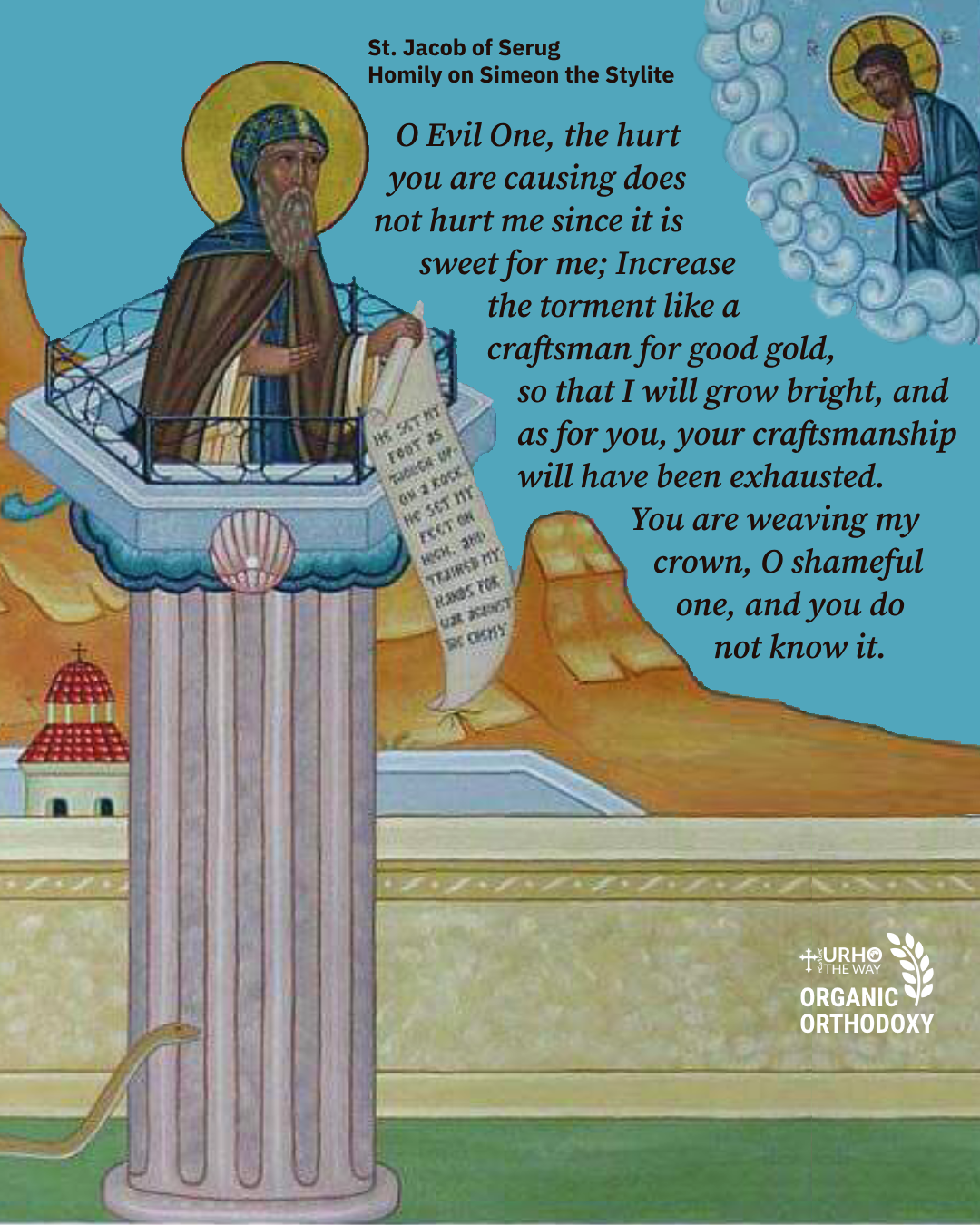
St. Simeon the Stylite (from Greek στῦλος stylos meaning pillar or column) was one of the most formidable ascetics that Christianity ever witnessed. The extreme eccentricities of his ascesis though daunting were never revulsive but awe-inspiring even to his disparagers who drew nigh to ponder his vocation more closely.
St. Simeon was born in 386 C.E. in a village named Sis from the region of Nicopolis in Northern Syria. Born to Christian parents he was baptized while young. However, he wasn’t trained in the rudiments of Christian faith for he had to tend his parent’s sheep from an early age thus spent most of his time in fields and mountains.
Once when it snowed and the sheep had to stay indoors Simeon happened to go to church along with his parents where he heard the Beatitude of Christ; “𝘉𝘭𝘦𝘴𝘴𝘦𝘥 𝘢𝘳𝘦 𝘵𝘩𝘰𝘴𝘦 𝘸𝘩𝘰 𝘮𝘰𝘶𝘳𝘯, 𝘧𝘰𝘳 𝘵𝘩𝘦𝘺 𝘴𝘩𝘢𝘭𝘭 𝘣𝘦 𝘤𝘰𝘮𝘧𝘰𝘳𝘵𝘦𝘥” (𝘔𝘢𝘵𝘵. 5:4). There began his long and arduous calling of mourning for his sins and the sins of the world which ultimately fetched him the title “𝘊𝘩𝘪𝘦𝘧 𝘰𝘧 𝘔𝘰𝘶𝘳𝘯𝘦𝘳𝘴” (ܪܺܫܳܐ ܕ݂ܰܐܒܺܝܠܶܐ risho dabile).
St. Simeon stayed a few years in monasteries at Tel’ada and Telneshe but the severity of his ascetic exercises so outweighed and alarmed his fellow monks that the Abbot ordered him to depart lest he might cause harm to the weaker ones who might try to emulate his practices.
On leaving the monasteries, Simeon wandered as a recluse for a brief stint and finally began mounting pillars of increasing heights beginning with 11 cubits, 17 cubits, 22 cubits and eventually 40 cubits on which he spent roughly the last 40 years of his life completely unsheltered exposing himself to the “flames of the sun, frosts of the winter, fierce blasts of the winds and the weakness of human nature” yet absolutely unshaken. Simeon reposed in the Lord in 459 C.E.
Simeon’s life seemed to enliven the testimony of the Psalmist; “𝘏𝘦 𝘮𝘢𝘥𝘦 𝘮𝘺 𝘧𝘦𝘦𝘵 𝘭𝘪𝘬𝘦 𝘵𝘩𝘦 𝘧𝘦𝘦𝘵 𝘰𝘧 𝘢 𝘥𝘦𝘦𝘳, 𝘢𝘯𝘥 𝘴𝘦𝘵 𝘮𝘦 𝘴𝘦𝘤𝘶𝘳𝘦 𝘰𝘯 𝘵𝘩𝘦 𝘩𝘦𝘪𝘨𝘩𝘵𝘴…𝘏𝘦 𝘴𝘦𝘵 𝘮𝘺 𝘧𝘦𝘦𝘵 𝘶𝘱𝘰𝘯 𝘢 𝘳𝘰𝘤𝘬 𝘮𝘢𝘬𝘪𝘯𝘨 𝘮𝘺 𝘴𝘵𝘦𝘱𝘴 𝘴𝘦𝘤𝘶𝘳𝘦” (𝘗𝘴.18:33; 40:2). The stance of continual prayer on the pillar which Simeon had inaugurated was not a passing vogue but was sustained by his followers until mid-nineteenth century.
Much ink may be spilled on the rigorous ascetic athleticism of Simeon but I intend to bring forward a striking distinctiveness of Simeon which evidently sets him apart i.e. his ardent love towards incense. In fact, Simeon’s ascetical life begins and ends with incense.
As the Syriac Vita records; “𝘍𝘳𝘰𝘮 𝘵𝘩𝘦 𝘵𝘪𝘮𝘦 𝘩𝘦 𝘸𝘢𝘴 𝘢 𝘣𝘰𝘺…𝘩𝘦 𝘩𝘢𝘥 𝘵𝘩𝘪𝘴 𝘱𝘦𝘤𝘶𝘭𝘪𝘢𝘳𝘪𝘵𝘺, 𝘢𝘴 𝘵𝘩𝘦 𝘧𝘭𝘰𝘤𝘬 𝘨𝘳𝘢𝘻𝘦𝘥, 𝘩𝘦 𝘸𝘰𝘶𝘭𝘥 𝘷𝘦𝘳𝘺 𝘥𝘪𝘭𝘪𝘨𝘦𝘯𝘵𝘭𝘺 𝘨𝘢𝘵𝘩𝘦𝘳 𝘴𝘵𝘰𝘳𝘢𝘹 (𝘢 𝘧𝘳𝘢𝘨𝘳𝘢𝘯𝘵 𝘨𝘶𝘮 𝘳𝘦𝘴𝘪𝘯), 𝘬𝘪𝘯𝘥𝘭𝘦 𝘢 𝘧𝘪𝘳𝘦 𝘢𝘯𝘥 𝘱𝘶𝘵 𝘵𝘩𝘦 𝘴𝘵𝘰𝘳𝘢𝘹 𝘰𝘯 𝘪𝘵, 𝘦𝘷𝘦𝘯 𝘸𝘩𝘦𝘯 𝘩𝘦 𝘥𝘪𝘥 𝘯𝘰𝘵 𝘤𝘭𝘦𝘢𝘳𝘭𝘺 𝘬𝘯𝘰𝘸 𝘸𝘩𝘺 𝘩𝘦 𝘱𝘶𝘵 𝘪𝘵.” After actively attending to the Scriptures and realizing the significance of offering incense Simeon “𝘵𝘰𝘰𝘬 𝘨𝘳𝘦𝘢𝘵 𝘱𝘢𝘪𝘯𝘴 𝘵𝘰 𝘨𝘢𝘵𝘩𝘦𝘳 𝘴𝘵𝘰𝘳𝘢𝘹 𝘢𝘯𝘥 𝘩𝘦 𝘢𝘭𝘴𝘰 𝘣𝘰𝘶𝘨𝘩𝘵 𝘸𝘩𝘢𝘵 𝘩𝘪𝘴 𝘧𝘦𝘭𝘭𝘰𝘸 𝘴𝘩𝘦𝘱𝘩𝘦𝘳𝘥𝘴 𝘤𝘰𝘭𝘭𝘦𝘤𝘵𝘦𝘥 𝘢𝘯𝘥 𝘸𝘪𝘵𝘩 𝘢𝘭𝘭 𝘳𝘦𝘷𝘦𝘳𝘦𝘯𝘤𝘦, 𝘩𝘦 𝘰𝘧𝘧𝘦𝘳𝘦𝘥 𝘪𝘵 𝘵𝘰 𝘰𝘶𝘳 𝘓𝘰𝘳𝘥 𝘴𝘢𝘺𝘪𝘯𝘨; ‘𝘓𝘦𝘵 𝘵𝘩𝘦 𝘴𝘸𝘦𝘦𝘵 𝘴𝘮𝘦𝘭𝘭 𝘢𝘴𝘤𝘦𝘯𝘥 𝘵𝘰 𝘎𝘰𝘥 𝘸𝘩𝘰 𝘪𝘴 𝘪𝘯 𝘩𝘦𝘢𝘷𝘦𝘯.’”
Once an angel visited Simeon and taught him to build an altar. Simeon complied with the commands of the angel and built the altar. He then inquired the angel; “𝘔𝘺 𝘓𝘰𝘳𝘥 𝘸𝘩𝘢𝘵 𝘪𝘴 𝘵𝘩𝘪𝘴? 𝘛𝘩𝘦 𝘮𝘢𝘯 𝘴𝘢𝘪𝘥 𝘵𝘰 𝘩𝘪𝘮, ‘𝘛𝘩𝘪𝘴 𝘪𝘴 𝘵𝘩𝘦 𝘴𝘢𝘯𝘤𝘵𝘶𝘢𝘳𝘺 𝘰𝘧 𝘵𝘩𝘢𝘵 𝘎𝘰𝘥 𝘸𝘩𝘰𝘮 𝘺𝘰𝘶 𝘸𝘰𝘳𝘴𝘩𝘪𝘱, 𝘵𝘰 𝘸𝘩𝘰𝘮 𝘺𝘰𝘶 𝘣𝘶𝘳𝘯 𝘪𝘯𝘤𝘦𝘯𝘴𝘦 𝘢𝘯𝘥 𝘵𝘰 𝘸𝘩𝘰𝘴𝘦 𝘸𝘳𝘪𝘵𝘪𝘯𝘨𝘴 𝘺𝘰𝘶 𝘱𝘢𝘪𝘥 𝘢𝘵𝘵𝘦𝘯𝘵𝘪𝘰𝘯.’”
Incidentally, the Church likens her martyrs to incense. For instance, the Qolo of Tuesday Matins states; “𝘠𝘰𝘶 𝘮𝘢𝘳𝘵𝘺𝘳𝘴 𝘧𝘦𝘭𝘭 𝘭𝘪𝘬𝘦 𝘪𝘯𝘤𝘦𝘯𝘴𝘦 𝘰𝘯 𝘵𝘩𝘦 𝘧𝘪𝘳𝘦, 𝘢𝘯𝘥 𝘵𝘩𝘦 𝘧𝘳𝘢𝘨𝘳𝘢𝘯𝘤𝘦 𝘰𝘧 𝘺𝘰𝘶𝘳 𝘭𝘰𝘷𝘦 𝘸𝘢𝘴 𝘣𝘭𝘰𝘸𝘯 𝘵𝘰 𝘵𝘩𝘦 𝘧𝘰𝘶𝘳 𝘲𝘶𝘢𝘳𝘵𝘦𝘳𝘴. 𝘗𝘳𝘢𝘺 𝘵𝘰 𝘵𝘩𝘦 𝘔𝘦𝘴𝘴𝘪𝘢𝘩 𝘵𝘩𝘢𝘵 𝘏𝘦 𝘮𝘢𝘺 𝘴𝘩𝘦𝘥 𝘏𝘪𝘴 𝘣𝘭𝘦𝘴𝘴𝘪𝘯𝘨 𝘰𝘯 𝘵𝘩𝘦 𝘊𝘩𝘶𝘳𝘤𝘩 𝘢𝘯𝘥 𝘩𝘦𝘳 𝘤𝘩𝘪𝘭𝘥𝘳𝘦𝘯 𝘸𝘩𝘰 𝘩𝘰𝘯𝘰𝘶𝘳 𝘺𝘰𝘶𝘳 𝘣𝘰𝘯𝘦𝘴. 𝘔𝘢𝘺 𝘵𝘳𝘢𝘯𝘲𝘶𝘪𝘭𝘪𝘵𝘺 𝘳𝘦𝘪𝘨𝘯 𝘪𝘯 𝘩𝘦𝘳 𝘸𝘩𝘰 𝘩𝘰𝘯𝘰𝘶𝘳𝘴 𝘺𝘰𝘶𝘳 𝘣𝘰𝘯𝘦𝘴.”
Just as resin burns and transforms into a sweet fragrance rising upward so also the pillar of Simeon resembled a crucible in which the squalor of his sufferings transformed into a pleasing spectacle of God’s grace. As St. Jacob of Serug poignantly puts it; “𝘏𝘰𝘸𝘦𝘷𝘦𝘳 𝘮𝘶𝘤𝘩 𝘵𝘩𝘦 𝘦𝘷𝘪𝘭 𝘰𝘯𝘦 𝘢𝘧𝘧𝘭𝘪𝘤𝘵𝘦𝘥 𝘩𝘪𝘮, 𝘵𝘩𝘢𝘵 𝘮𝘶𝘤𝘩 𝘩𝘪𝘴 𝘣𝘦𝘢𝘶𝘵𝘺 𝘪𝘯𝘤𝘳𝘦𝘢𝘴𝘦𝘥. 𝘍𝘰𝘳 𝘨𝘰𝘰𝘥 𝘨𝘰𝘭𝘥 𝘦𝘯𝘵𝘦𝘳𝘦𝘥 𝘵𝘩𝘦 𝘤𝘳𝘶𝘤𝘪𝘣𝘭𝘦 𝘢𝘯𝘥 𝘮𝘢𝘯𝘪𝘧𝘦𝘴𝘵𝘦𝘥 𝘪𝘵𝘴 𝘣𝘦𝘢𝘶𝘵𝘺. 𝘈𝘯𝘥 𝘩𝘦 𝘨𝘭𝘢𝘥𝘥𝘦𝘯𝘦𝘥 𝘩𝘪𝘴 𝘓𝘰𝘳𝘥 𝘸𝘩𝘰 𝘩𝘢𝘥 𝘳𝘦𝘮𝘰𝘷𝘦𝘥 𝘧𝘳𝘰𝘮 𝘩𝘪𝘮 𝘵𝘩𝘦 𝘩𝘢𝘵𝘦𝘧𝘶𝘭 𝘥𝘳𝘰𝘴𝘴.”
That Simeon was truly a spectacle of God’s grace and that this grace triumphs nature was evidently unveiled when his foot was afflicted with a gangrenous ulcer and the flesh decayed leaving the bones and tendons visible, he was still able to maintain his stance with his entire body weight being balanced on one foot. It was this same grace which strengthened Simeon to bear the blows of Satan.
St. Jacob of Serug further mentions; “𝘕𝘰𝘸 𝘵𝘩𝘦 𝘤𝘰𝘳𝘱𝘴𝘦 𝘰𝘧 𝘩𝘪𝘴 𝘧𝘰𝘰𝘵 𝘸𝘢𝘴 𝘴𝘦𝘵 𝘣𝘦𝘧𝘰𝘳𝘦 𝘩𝘪𝘮 𝘢𝘯𝘥 𝘩𝘦 𝘸𝘢𝘴 𝘴𝘪𝘯𝘨𝘪𝘯𝘨 𝘵𝘰 𝘪𝘵: ‘𝘞𝘩𝘺 𝘢𝘳𝘦 𝘺𝘰𝘶 𝘴𝘩𝘢𝘬𝘦𝘯 𝘢𝘯𝘥 𝘨𝘳𝘪𝘦𝘷𝘦𝘥 𝘴𝘪𝘯𝘤𝘦 𝘺𝘰𝘶𝘳 𝘩𝘰𝘱𝘦 𝘪𝘴 𝘬𝘦𝘱𝘵? 𝘍𝘰𝘳 𝘢𝘨𝘢𝘪𝘯 𝘰𝘯𝘵𝘰 𝘵𝘩𝘢𝘵 𝘵𝘳𝘦𝘦 𝘧𝘳𝘰𝘮 𝘸𝘩𝘪𝘤𝘩 𝘺𝘰𝘶 𝘩𝘢𝘷𝘦 𝘣𝘦𝘦𝘯 𝘤𝘶𝘵 𝘰𝘧𝘧 𝘺𝘰𝘶 𝘸𝘪𝘭𝘭 𝘣𝘦 𝘨𝘳𝘢𝘧𝘵𝘦𝘥. 𝘎𝘰, 𝘸𝘢𝘪𝘵 𝘧𝘰𝘳 𝘮𝘦 𝘶𝘯𝘵𝘪𝘭 𝘐 𝘤𝘰𝘮𝘦 𝘢𝘯𝘥 𝘥𝘰 𝘯𝘰𝘵 𝘨𝘳𝘪𝘦𝘷𝘦. 𝘍𝘰𝘳 𝘸𝘪𝘵𝘩𝘰𝘶𝘵 𝘺𝘰𝘶 𝘐 𝘸𝘪𝘭𝘭 𝘯𝘰𝘵 𝘳𝘪𝘴𝘦 𝘶𝘱 𝘰𝘯 𝘵𝘩𝘦 𝘭𝘢𝘴𝘵 𝘥𝘢𝘺. 𝘞𝘩𝘦𝘵𝘩𝘦𝘳 𝘵𝘰 𝘵𝘩𝘦 𝘣𝘳𝘪𝘥𝘢𝘭 𝘤𝘩𝘢𝘮𝘣𝘦𝘳 𝘰𝘳 𝘵𝘰 𝘎𝘦𝘩𝘦𝘯𝘯𝘢 𝘐 𝘸𝘪𝘭𝘭 𝘸𝘢𝘭𝘬 𝘰𝘯 𝘺𝘰𝘶.’”
Finally, the death of Simeon was way fragrant than incense. As the vita notes; “𝘈 𝘤𝘰𝘰𝘭, 𝘳𝘦𝘧𝘳𝘦𝘴𝘩𝘪𝘯𝘨, 𝘢𝘯𝘥 𝘷𝘦𝘳𝘺 𝘧𝘳𝘢𝘨𝘳𝘢𝘯𝘵 𝘸𝘪𝘯𝘥 𝘣𝘭𝘦𝘸 𝘢𝘴 𝘵𝘩𝘰𝘶𝘨𝘩 𝘢 𝘩𝘦𝘢𝘷𝘦𝘯𝘭𝘺 𝘥𝘦𝘸 𝘸𝘦𝘳𝘦 𝘧𝘢𝘭𝘭𝘪𝘯𝘨 𝘰𝘯 𝘵𝘩𝘦 𝘴𝘢𝘪𝘯𝘵 𝘢𝘯𝘥 𝘸𝘦𝘳𝘦 𝘴𝘦𝘯𝘥𝘪𝘯𝘨 𝘧𝘰𝘳𝘵𝘩 𝘢 𝘧𝘳𝘢𝘨𝘳𝘢𝘯𝘵 𝘴𝘤𝘦𝘯𝘵 𝘧𝘳𝘰𝘮 𝘩𝘪𝘮 𝘴𝘶𝘤𝘩 𝘢𝘴 𝘩𝘢𝘴 𝘯𝘰𝘵 𝘣𝘦𝘦𝘯 𝘴𝘱𝘰𝘬𝘦𝘯 𝘰𝘧 𝘪𝘯 𝘵𝘩𝘦 𝘸𝘰𝘳𝘭𝘥. 𝘛𝘩𝘦𝘳𝘦 𝘸𝘢𝘴 𝘯𝘰𝘵 𝘫𝘶𝘴𝘵 𝘰𝘯𝘦 𝘴𝘮𝘦𝘭𝘭 𝘦𝘹𝘶𝘥𝘪𝘯𝘨 𝘧𝘳𝘰𝘮 𝘪𝘵, 𝘣𝘶𝘵 𝘸𝘢𝘷𝘦 𝘶𝘱𝘰𝘯 𝘸𝘢𝘷𝘦 𝘬𝘦𝘱𝘵 𝘤𝘰𝘮𝘪𝘯𝘨. 𝘛𝘩𝘦𝘳𝘦 𝘸𝘦𝘳𝘦 𝘮𝘶𝘭𝘵𝘪𝘱𝘭𝘦 𝘴𝘤𝘦𝘯𝘵𝘴, 𝘦𝘢𝘤𝘩 𝘥𝘪𝘧𝘧𝘦𝘳𝘦𝘯𝘵 𝘧𝘳𝘰𝘮 𝘵𝘩𝘦 𝘰𝘵𝘩𝘦𝘳. 𝘛𝘰 𝘵𝘩𝘰𝘴𝘦 𝘣𝘪𝘭𝘭𝘰𝘸𝘪𝘯𝘨 𝘧𝘳𝘢𝘨𝘳𝘢𝘯𝘤𝘦𝘴 𝘯𝘰𝘯𝘦 𝘰𝘧 𝘵𝘩𝘦 𝘴𝘸𝘦𝘦𝘵 𝘴𝘱𝘪𝘤𝘦𝘴 𝘰𝘳 𝘦𝘹𝘤𝘦𝘭𝘭𝘦𝘯𝘵 𝘢𝘯𝘥 𝘱𝘭𝘦𝘢𝘴𝘶𝘳𝘢𝘣𝘭𝘦 𝘩𝘦𝘳𝘣𝘴 𝘰𝘧 𝘵𝘩𝘪𝘴 𝘸𝘰𝘳𝘭𝘥 𝘤𝘢𝘯 𝘣𝘦 𝘤𝘰𝘮𝘱𝘢𝘳𝘦𝘥, 𝘧𝘰𝘳 𝘵𝘩𝘦𝘺 𝘸𝘦𝘳𝘦 𝘥𝘪𝘴𝘱𝘦𝘯𝘴𝘦𝘥 𝘣𝘺 𝘵𝘩𝘦 𝘱𝘳𝘰𝘷𝘪𝘥𝘦𝘯𝘤𝘦 𝘰𝘧 𝘎𝘰𝘥.”
Probably because of Simeon’s exceeding fondness for incense he received a unique privilege of being buried in a church; an honour deprived to the apostles or any other martyrs. Among the saints Simeon was the first to be buried in a church; and that too not just any church but the greatest church constructed in the 5th cent. (476-490 C.E.) by the Emperor Constantine in Qalat Siman. It was an absolute architectural marvel for its time widely renowned for its size, beauty and workmanship yielding substantial influence not just on the religious and artistic culture of late antiquity but on the economy of Syria as well.
~ 𝐃𝐚𝐲𝐫𝐨𝐲𝐨 𝐅𝐫. 𝐁𝐚𝐬𝐢𝐥
 Urho, The Way