
ܫܠܳܡܳܐ Shlomo dear friends,
The Fast of the Apostles, though inspired from and attributed to the Holy Apostles, is however a dominical fast dedicated to the Holy Spirit. St. John of Mardin writes in his canon of 𝘋𝘢𝘺𝘳𝘰 𝘥’𝘔𝘰𝘳 𝘏𝘢𝘯𝘢𝘯𝘺𝘰; “The fast of the forty days (of the Nativity) is for the Father, the Great Fast of the Son is forty days except for the week of the saving Passion, and the third dominical fast which is for the Holy Spirit, is for fifty days from the Sunday after the Feast of the Pentecost.” Furthermore, Mor John of Dara states in his Commentary on Holy Qurobo that the Apostles themselves fasted until the fiftieth day after Pentecost.
Bar Ebroyo records in his 𝘒𝘵𝘩𝘰𝘣𝘰 𝘥-𝘏𝘶𝘥𝘰𝘺𝘦 (The Book of Guides, also known as Nomocanon) various traditions concerning the observance of this Fast. He mentions that some commenced the Fast the Monday following the feast of Pentecost while some others began on the second Monday following Pentecost. Nevertheless both concluded on June 29th with the feast of St. Peter and St. Paul. In the 19th century the duration of the Fast was shortened to thirteen days from June 16th to June 29th. Finally in the Council of Homs 1946, the period of the Fast was further reduced to three days i.e. June 26th – 29th.
The more distant the Fast got from the feast of Pentecost the more divorced it became from its theological import. Rather than glorifying “the Holy Spirit who 𝐩𝐞𝐫𝐟𝐞𝐜𝐭𝐬 𝐭𝐡𝐞 𝐀𝐩𝐨𝐬𝐭𝐥𝐞𝐬” (𝘚𝘦𝘥𝘳𝘰 𝘰𝘧 𝘵𝘩𝘦 𝘛𝘩𝘪𝘳𝘥 𝘚𝘦𝘳𝘷𝘪𝘤𝘦 𝘰𝘧 𝘗𝘦𝘯𝘵𝘦𝘤𝘰𝘴𝘵) we appear to glorify the Apostles themselves. Although the Apostles walked with Christ and were taught by Christ Himself, they neither understood Christ nor His teachings until the reception of the Holy Spirit because faith is a gift of the Spirit (1 𝘑𝘰𝘩𝘯 2:27). St. Basil the Great remarks; “Faith is superior to rational methodologies when it comes to drawing the soul to assent. It is not the logical necessity of deductive proofs that engenders faith, but the activity of the Spirit.” (𝘏𝘰𝘮𝘪𝘭𝘺 𝘰𝘯 𝘗𝘴𝘢𝘭𝘮 115).
It is the Spirit who enlightens our faculties, mediates our memory, and reminds us the teachings of Christ. As Christ Himself said; “The Holy Spirit, whom the Father will send in my name, will teach you everything and remind you of all that I have said to you.” (𝘚𝘵. 𝘑𝘰𝘩𝘯 14:26). Therefore as we observe this Fast may we bear in mind the original purport of this Fast.
“𝘠𝘰𝘶, 𝘸𝘩𝘰 𝘥𝘦𝘴𝘤𝘦𝘯𝘥𝘦𝘥 𝘪𝘯 𝘵𝘩𝘦 𝘭𝘪𝘬𝘦𝘯𝘦𝘴𝘴 𝘰𝘧 𝘧𝘪𝘦𝘳𝘺 𝘵𝘰𝘯𝘨𝘶𝘦𝘴 𝘶𝘱𝘰𝘯 𝘵𝘩𝘦 𝘏𝘰𝘭𝘺 𝘈𝘱𝘰𝘴𝘵𝘭𝘦𝘴 𝘢𝘯𝘥 𝘮𝘢𝘥𝘦 𝘵𝘩𝘦𝘮 𝘱𝘦𝘳𝘧𝘦𝘤𝘵 𝘣𝘺 𝘥𝘪𝘷𝘪𝘯𝘦 𝘨𝘪𝘧𝘵𝘴; 𝘠𝘰𝘶 𝘸𝘩𝘰 𝘸𝘦𝘳𝘦 𝘣𝘳𝘪𝘭𝘭𝘪𝘢𝘯𝘵𝘭𝘺 𝘳𝘦𝘷𝘦𝘢𝘭𝘦𝘥 𝘢𝘯𝘥 𝘮𝘢𝘥𝘦 𝘬𝘯𝘰𝘸𝘯 𝘵𝘰 𝘣𝘦 𝘤𝘰𝘯𝘴𝘶𝘣𝘴𝘵𝘢𝘯𝘵𝘪𝘢𝘭 𝘸𝘪𝘵𝘩 𝘵𝘩𝘦 𝘍𝘢𝘵𝘩𝘦𝘳 𝘢𝘯𝘥 𝘵𝘩𝘦 𝘚𝘰𝘯, 𝘮𝘢𝘬𝘦 𝘶𝘴 𝘢𝘭𝘴𝘰 𝘸𝘰𝘳𝘵𝘩𝘺 𝘰𝘧 𝘳𝘦𝘤𝘦𝘪𝘷𝘪𝘯𝘨 𝘵𝘩𝘦 𝘳𝘪𝘤𝘩𝘯𝘦𝘴𝘴 𝘰𝘧 𝘺𝘰𝘶𝘳 𝘥𝘪𝘷𝘪𝘯𝘦 𝘨𝘪𝘧𝘵𝘴.” (𝘓𝘪𝘵𝘢𝘯𝘺 𝘰𝘧 𝘗𝘦𝘯𝘵𝘦𝘤𝘰𝘴𝘵)
Yours in Christ,
Dayroyo Fr. Basil
Mor Ignatius Dayro, Manjinikkara
Wisdom From The Saints
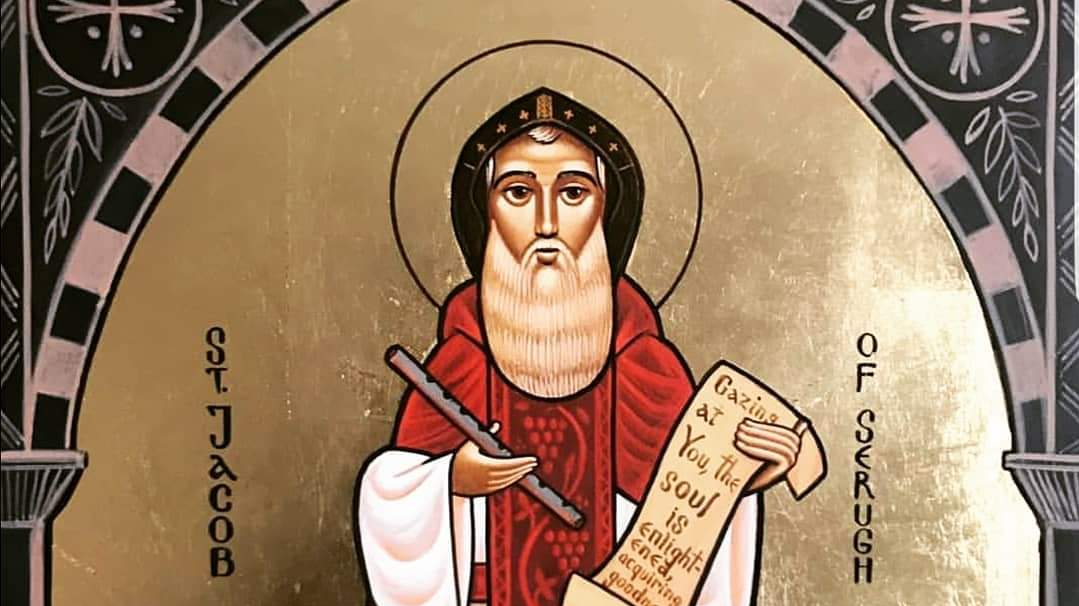
St. Jacob of Serugh on The Healing of the Lame Man by St. Peter and St. John
Simon and John did not have a penny, but they had the tenderness to heal the complications of the sick, the word that loosens in earth and Heaven, the voice that drives out and defeats the devils and demons, the shadow that visits the sick and heals them, the great power that gives resurrection to the dead.
The Head of the disciples, relying on all this riches, told the lame man: “all that I have I give you”. And because he possessed great riches, he promised a gift richer than the world’s richest.
What king that mortgages his crown can give legs to the lame man as these two disciples did? In which stores was such a gift sold? And how much gold will a person give to possess it? Who could give a lame man the ability to run? And if he could, the world would have bought it in riches.
That is why he (Simon) said to the lame man: “the thing I have I give you”, because he was sure of his treasures, “In the name of Jesus Christ rise up and walk”, along with the word, healing flew and supported the sick. The man of pain gained strength and endured fears and was healed by the strength that called on him wisely. That person who was tortured all his life with an incurable disease enjoyed life within an hour. That person who was bound with an inability to walk from the womb was loosened by the mercies and given the gift to run with speed.
Source: “Homily 179: The Lame Man who was Healed by Simon and John”, St. Jacob of Serugh
Gospel For The Eyes

Icon: Rabbula Gospels, Department of Syriac Studies
The Rabbula Gospels are one of the oldest surviving biblical manuscripts and are based on the Syriac Peshita version of the Gospel, dating back to the 6th century AD.
The icons contained in the Rabbula Gospel invite the reader to further contemplate the scenes of the Gospel. One of those icons is the Pentecost icon which is based on the scene in Acts 2 (which is the Epistle for the Pentecost Sunday Mass).
The large blue arch in the icon symbolises the heavenly realm. The trees that are growing above the blue represent the Garden of Paradise. This reflects the same ideas contained in the Hymns on Paradise from St Ephrem. Paradise belongs outside time and space, but the icon shows us that paradise still encompasses the Church and is a direct source of well-being for life on earth. This is evident when the Holy Spirit descends on the Upper Chamber where the apostles are assembled at Pentecost. “Blessed is He who exalted Adam and caused him to return to Paradise.” (from Hymns on Paradise from St Ephrem)
The dove descending encompasses the Spirit of the Living God. It descends from the blue heavenly realm and enters the earthly realm to rest on Mary who is speaking with the apostles. This is reflective of the apostles speaking in tongues (Acts 2:4). The dove of course also echoes Jesus’ earlier baptism. Reflective of the scene in Acts 2:3 are tongues of fire resting on each disciple’s head.
The inclusion of Mary in the icon is important and the Oriental Church has been instrumental in the development of early Marian theology. Mary is not mentioned in the scene in Acts 2, however, she is mentioned as being with the Apostles earlier in Acts 1:14. St John Chrysostom in his Homily on Pentecost also states that all 120 disciples were gathered after the resurrection. The icon puts Mary centre stage in the scene and puts her in a place of prominence. Her dark blue robe stands in contrast to the paler blue of the apostles and her halo is golden in comparison to the violet of the apostles. The icon is depicting the foundational moment of the gathering of Christ’s Church. Christ had ascended nine days earlier and left Mary, inspired by the Holy Spirit, as the leading Church custodian amid the apostles. Mary is also playing a symbolic role representing the Church – she is the “Bride”. Beneath Mary’s veil is the familiar Syriac head cloth which holds the hair into place.
Around Mary you can see a concentration of red which is representative of the divine. However this is also a typological reference to the burning bush at Mt Sinai. The rocky sapphire stones on which they stand are a reference to Exodus 24:10 “and they saw the God of Israel. There was under his feet as it were a pavement of sapphire stone, like the very heaven for clearness.” This depicts Mary as the ark of the new covenant.
Source: Our Lady of Lebanon Maronite Cathedral
Liturgical Pearls
Hymn: Penthikkosthin naal vare naam (Until The Day of Pentecost)
Listen to it here – https://archive.org/details/penthikkosthin-naal
A Maneeso (Manitho) of St. Severus of Antioch for the Feast of Pentecost, currently recited at the conclusion of the Second Kneeling Service of the Feast of Pentecost in the Syriac Orthodox Church (Malankara Jacobite). This Antiphon is the Malayalam translation of a hymn originally authored by St. Severus (d. AD 518) in Greek and later translated into Syriac.
English Text:
Until «the» day of (the) Pentecost,
We do not kneel while praying
And against our foes we sing
With him the di-vine Psalmist
And Prophet David, saying:
They are brought down and fallen
But we rise up, stand ready
(The) Holy Spirit came down, in
The image of fiery tongues,
Since unable to endure
His dazzling sight, we kneel down
In a most di-vine – ma-nner.
From Our Archives
- Video: “What Did Jesus Teach After The Resurrection?”, excerpt of a sermon by His Holiness Mor Ignatius Aphrem II
- Article: “Apocalypse Of Human Destiny” (Ascension) by Dayroyo Fr. Basil
- Article: “Apostolic Legacy” (Feast of The Holy Apostles) by Dayroyo Fr. Basil
- Interview: “Christ and Corruption: The Julianist Controversy” with Daniel Michalski
- Infographic: “Misconceptions about Speaking in Tongues” by Sbdn. Wasim Shehata
Subscribe to our quarterly newsletter and get our latest updates
Follow us on our social media platforms to learn more about the love of God through our Syriac Orthodox faith.
 Urho, The Way