
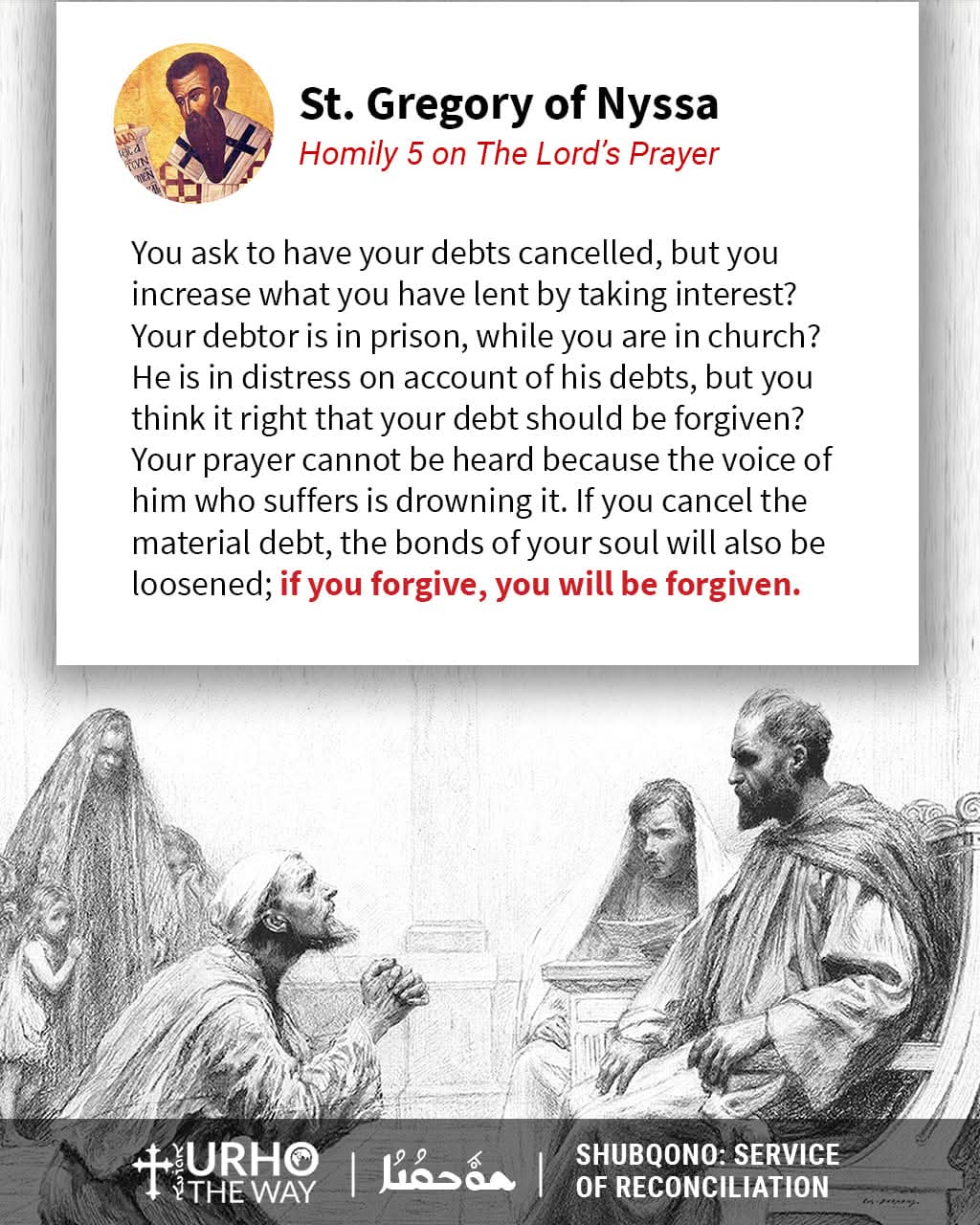
As we stand at the threshold of the Great Lent, the Church begins this joyful struggle with the greatest virtue that makes us participants of the divine nature i.e. Forgiveness. Through the Incarnation of Christ, forgiveness – which was hitherto believed to be the prerogative of God (Luke 5: 21) – has not only been extended to human beings but also been transformed into a virtue which the Master imitates His servants in, as is made evident in the Lord’s Prayer; “𝘧𝘰𝘳𝘨𝘪𝘷𝘦 𝘶𝘴 𝘰𝘶𝘳 𝘥𝘦𝘣𝘵𝘴 𝘢𝘯𝘥 𝘴𝘪𝘯𝘴 𝘢𝘴 𝘸𝘦 𝘩𝘢𝘷𝘦 𝘢𝘭𝘴𝘰 𝘧𝘰𝘳𝘨𝘪𝘷𝘦𝘯 𝘰𝘶𝘳 𝘥𝘦𝘣𝘵𝘰𝘳𝘴.”
St. Gregory of Nyssa expounds this; “𝘐𝘮𝘪𝘵𝘢𝘵𝘦 𝘛𝘩𝘺 𝘴𝘦𝘳𝘷𝘢𝘯𝘵, 𝘖 𝘓𝘰𝘳𝘥…𝘐 𝘩𝘢𝘷𝘦 𝘢𝘣𝘴𝘰𝘭𝘷𝘦𝘥, 𝘢𝘣𝘴𝘰𝘭𝘷𝘦 𝘛𝘩𝘰𝘶 𝘵𝘰𝘰; 𝘐 𝘩𝘢𝘷𝘦 𝘧𝘰𝘳𝘨𝘪𝘷𝘦𝘯, 𝘧𝘰𝘳𝘨𝘪𝘷𝘦 𝘛𝘩𝘰𝘶 𝘢𝘭𝘴𝘰; 𝘐 𝘩𝘢𝘷𝘦 𝘴𝘩𝘰𝘸𝘯 𝘨𝘳𝘦𝘢𝘵 𝘮𝘦𝘳𝘤𝘺 𝘵𝘰 𝘮𝘺 𝘯𝘦𝘪𝘨𝘩𝘣𝘰𝘶𝘳 – 𝘪𝘮𝘪𝘵𝘢𝘵𝘦 𝘛𝘩𝘺 𝘴𝘦𝘳𝘷𝘢𝘯𝘵’𝘴 𝘤𝘩𝘢𝘳𝘪𝘵𝘺, 𝘖 𝘓𝘰𝘳𝘥.”
Forgiveness is the blatant expression of theosis. Bring to our minds the words Jacob spoke when Esau forgave him; “𝘛𝘳𝘶𝘭𝘺 𝘵𝘰 𝘴𝘦𝘦 𝘺𝘰𝘶𝘳 𝘧𝘢𝘤𝘦 𝘪𝘴 𝘭𝘪𝘬𝘦 𝘴𝘦𝘦𝘪𝘯𝘨 𝘵𝘩𝘦 𝘧𝘢𝘤𝘦 𝘰𝘧 𝘎𝘰𝘥.” (Gen. 33:10).
Forgiveness is not merely some form of personal acquittal or recompense but it is our inhibition to let evil and its myriads of manifestations triumph over divine goodness. This seems to be why – according to the Gospel of Luke – the first words uttered by Christ on the Cross were of forgiveness; “𝘍𝘢𝘵𝘩𝘦𝘳, 𝘧𝘰𝘳𝘨𝘪𝘷𝘦 𝘵𝘩𝘦𝘮; 𝘧𝘰𝘳 𝘵𝘩𝘦𝘺 𝘥𝘰 𝘯𝘰𝘵 𝘬𝘯𝘰𝘸 𝘸𝘩𝘢𝘵 𝘵𝘩𝘦𝘺 𝘢𝘳𝘦 𝘥𝘰𝘪𝘯𝘨.” (Luke 23:34).
Forgiveness is the supreme act of rebellion against evil. Therefore the refusal to forgive is to insult the Cross of Christ because as Brian Zahnd puts it; “𝘛𝘩𝘦 𝘊𝘳𝘰𝘴𝘴 𝘪𝘴 𝘵𝘩𝘦 𝘢𝘤𝘵 𝘰𝘧 𝘳𝘢𝘥𝘪𝘤𝘢𝘭 𝘧𝘰𝘳𝘨𝘪𝘷𝘦𝘯𝘦𝘴𝘴 𝘵𝘩𝘢𝘵 𝘨𝘪𝘷𝘦𝘴 𝘴𝘪𝘯, 𝘷𝘪𝘰𝘭𝘦𝘯𝘤𝘦 𝘢𝘯𝘥 𝘳𝘦𝘵𝘳𝘪𝘣𝘶𝘵𝘪𝘰𝘯 𝘢 𝘱𝘭𝘢𝘤𝘦 𝘵𝘰 𝘥𝘪𝘦 𝘪𝘯 𝘵𝘩𝘦 𝘣𝘰𝘥𝘺 𝘰𝘧 𝘊𝘩𝘳𝘪𝘴𝘵.”
Hence in the Shubqono service, when the priest prostrates before the laity to seek forgiveness, he prays; “𝘔𝘺 𝘣𝘦𝘭𝘰𝘷𝘦𝘥 𝘰𝘯𝘦𝘴, 𝘧𝘰𝘳𝘨𝘪𝘷𝘦 𝘮𝘦 𝘧𝘰𝘳 𝘵𝘩𝘦 𝘴𝘢𝘬𝘦 𝘰𝘧 𝘊𝘩𝘳𝘪𝘴𝘵.” We forgive not for ourselves but for the sake of Christ and his Cross.
Finally, forgiveness is what it means to love in the deepest sense and love is the most endearing title that God rejoices in, for we read in the Sedro of the Shubqono service; “𝘖 𝘊𝘩𝘳𝘪𝘴𝘵, 𝘰𝘶𝘳 𝘎𝘰𝘥, 𝘸𝘩𝘰 𝘪𝘴 𝘭𝘰𝘷𝘦 𝘢𝘯𝘥 𝘪𝘴 𝘤𝘢𝘭𝘭𝘦𝘥 𝘭𝘰𝘷𝘦, 𝘢𝘯𝘥 𝘥𝘦𝘭𝘪𝘨𝘩𝘵𝘴 𝘪𝘯 𝘵𝘩𝘪𝘴 𝘵𝘪𝘵𝘭𝘦 𝘵𝘩𝘢𝘯 𝘢𝘭𝘭 𝘰𝘵𝘩𝘦𝘳 𝘵𝘪𝘵𝘭𝘦𝘴.”
When we read the Scriptures we mature in the stature of Christ. Hence in the Synoptic Gospels Christ urges us; “𝘓𝘰𝘷𝘦 𝘺𝘰𝘶𝘳 𝘯𝘦𝘪𝘨𝘩𝘣𝘰𝘶𝘳𝘴 𝘢𝘴 𝘺𝘰𝘶𝘳𝘴𝘦𝘭𝘧”; but when we reach the Gospel of John, having grown, Christ raises the benchmark of love, for He now says; “𝘓𝘰𝘷𝘦 𝘰𝘯𝘦 𝘢𝘯𝘰𝘵𝘩𝘦𝘳 𝘫𝘶𝘴𝘵 𝘢𝘴 𝘐 𝘩𝘢𝘷𝘦 𝘭𝘰𝘷𝘦𝘥 𝘺𝘰𝘶.”(John 13: 34).
How beautifully does the Scripture sketch the transitional nature of love! We begin with loving ourselves but then slowly our ‘selves’ should be transcended for Christ. Only then can we affirm with St. Paul; “𝘐𝘵 𝘪𝘴 𝘯𝘰 𝘭𝘰𝘯𝘨𝘦𝘳 𝘐 𝘸𝘩𝘰 𝘭𝘪𝘷𝘦, 𝘣𝘶𝘵 𝘪𝘵 𝘪𝘴 𝘊𝘩𝘳𝘪𝘴𝘵 𝘸𝘩𝘰 𝘭𝘪𝘷𝘦𝘴 𝘪𝘯 𝘮𝘦.”(Gal. 2:20).
My beloved ones forgive me for the sake of Christ and His Cross. Wishing you a blessed Great Lent!
~ 𝐃𝐚𝐲𝐫𝐨𝐲𝐨 𝐅𝐫. 𝐁𝐚𝐬𝐢𝐥

