
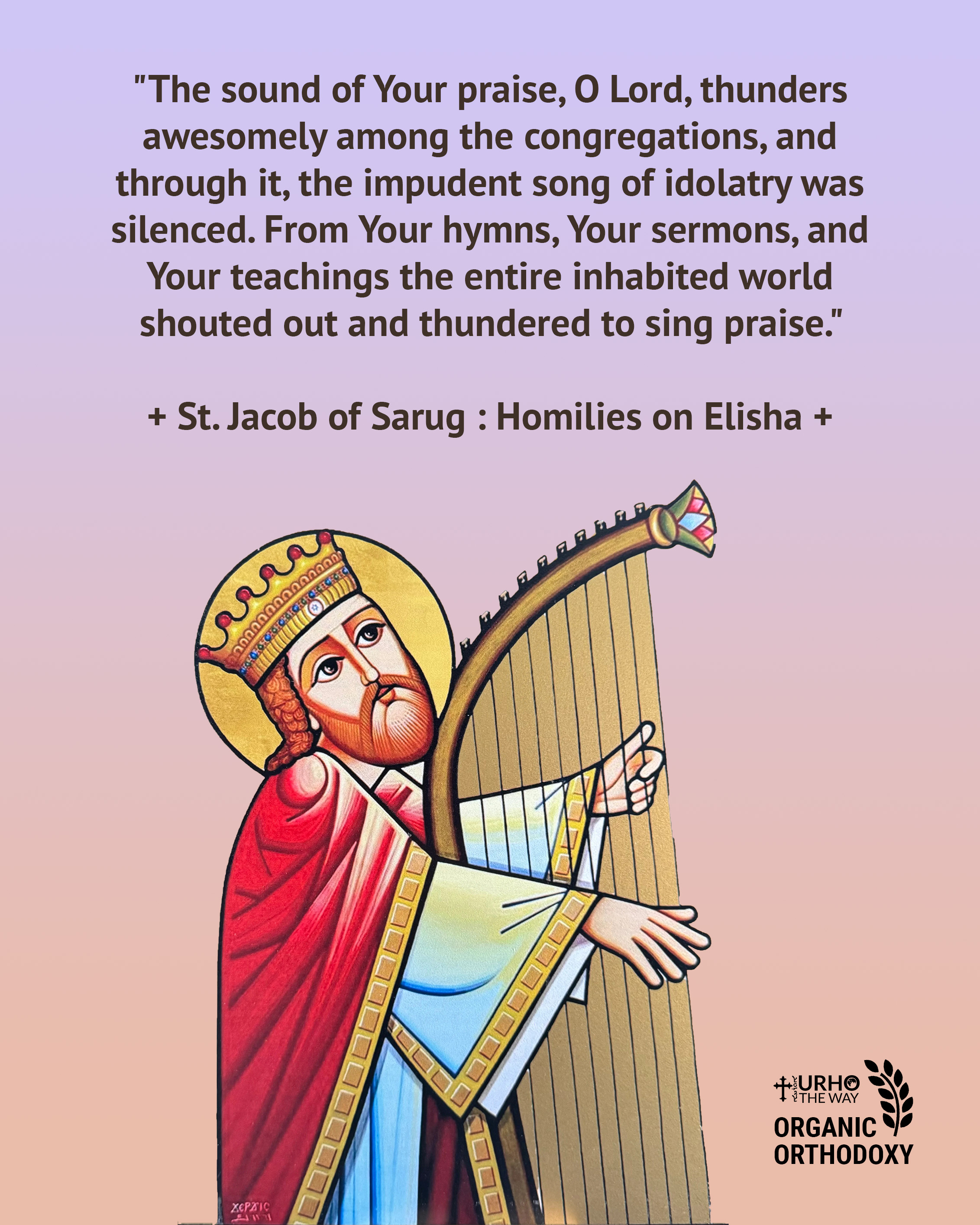
Music is the language of heart efficacious enough to transcend the socio-cultural demarcations and thus a popular definition of music is “speechless speech.” Even in the Indian culture one of the titles of God is Nada Brahma – music is divine or divine is music. The widely acclaimed lullaby of Malayalis is Omana thinkal kidavo composed in Nilambari ragam by the Great Irayimman Thampi, a renowned Carnatic musician. Infants fall asleep to this cradlesong not because they comprehend the lyrics or appreciate the meaning of the song rather this is the potency of music. Music wields a substantial influence in shaping us and therefore we should be cautious to the kind of music we expose ourselves to. Kristin M. Collier, an Assistant Professor of internal medicine at the University of Michigan, remarkably pens in her article entitled “The Theobiology of a Mother’s Voice”;
“The fact that a mother’s voice affects the size of her children’s brain by speaking to them or the physiologic functions of breathing or heart rate, points to the beautiful interconnectedness of our humanity, and humanity’s connection with God. Consider when Mary sings to the Lord Jesus in her womb; we can only imagine that this was not the last time she sang to her Son who is our Lord. We can infer that baby Jesus was physiologically shaped by his mother’s voice. This is a great mystery of our faith: that our incarnate Lord Jesus, the Word made flesh, the very voice of the Lord, the One through whom the world was formed, was himself physically shaped by his Mother Mary’s voice on earth.”
This is corroborated by the hymn of Monday Sixth Hour;
“I passed by Bethlehem and I heard a voice in a cave. It was Mary, who was singing to her Son, and thus she spoke to him: Blessed am I, my Son, who became your mother. Blessed am I, who gave you milk to suck, and if a sign from you did not permit me, I would not approach you.”
Music possesses the character of epiclesis. It is mighty to make even the power of God descend. Notice the request of prophet Elisha!
“Get me a musician.” And then, while the musician was playing, the hand of the Lord came on him.” (2 Kings 3:15)
Psalms being the middle book of the Holy Bible implies that music is the heart of the Scriptures. Therefore, music invariably becomes the heart of our Liturgy too which is the exegesis, explanation, expression and elaboration of the Holy Scriptures. Until we turn to the Liturgy, we cannot understand the Scriptures.
“But when I thought how to understand this, it seemed to me a wearisome task, until I went into the sanctuary of God; then I perceived their end” (Ps 73: 16-17).
St. Paul further insists on;
“Do not get drunk with wine, for that is debauchery, but be filled with the Spirit, as you sing psalms and hymns and spiritual songs to one another, singing and making melody to the Lord in your hearts” (Eph 5: 18-19).
“Let the word of Christ dwell in you richly; teach and admonish one another in all wisdom; and with gratitude in your hearts sing psalms, hymns, and spiritual songs to God.” (Col 3:16).
Music is a veritable elixir that heals both the artist and the audience. Nature, human beings and animals are equally amused by music. A Sanskrit Sloka goes; “Pashurveti shishurveti veti ganarasam phani” (the cow, the child and the snake alike enjoy the charm of music).
One of the Psalms that the Church recites at Night Vigil is Ps 19.
“The heavens are telling the glory of God and the firmament proclaims his handiwork. Day to day pours forth speech and night to night declares knowledge. There is no speech, nor are there words; their voice is not heard; yet their voice goes out through all the earth and their words to the end of the world.” (Ps 19:1-4).
We infer that the worship of nature lacks speech, words and voice. However, human beings are endowed with all these faculties to compensate the vacuum of nature’s worship. The Bo’utho of Mor Jacob of Monday Vespers expounds;
“The one who possesses a mouth and word and tongue ought to give thanks for the creatures which are silent.”
Prof. Philipp Harnoncourt, an Austrian theologian, priest, musician and liturgist comments;
“Music is the language of heaven, namely the cosmos, which is found out and imitated by human beings.”
Human beings are terrestrial and celestial at the same time, by virtue of which we chant the Qaumo (praise of the celestial beings Rev 4:8), sing the Angelic Hymn and recite the Praise of the Cherubim. It is us who partake in the incessant worship of the cosmos and the celestial beings and not vice versa. The Pre-Sanctus prayer of the Divine Liturgy validates this premise;
“To Him, whom the heavenly hosts, the corporeal and incorporeal, glorify; the sun, the moon, and all the stars; the earth, the seas, and the first-born inscribed in the heavenly Jerusalem; angels and archangels, celestial virtues, principalities, thrones, dominions, powers, the many-eyed cherubim and the six-winged seraphim who, covering their faces and feet, fly to one another, chanting holy three times, crying out and saying…”
Finally, it is the boundary breaching ability of music that led the Church to employ it as a pivotal pedagogical tool. Music was effective because it was affective. Susan Ashbrook Harvey enunciates;
“As the political fortunes of Christians improved, converts poured in. But many came without knowledge of the Bible and, as converts from polytheistic religions, without awareness of doctrine. In this context, liturgy expanded dramatically: first, to present a splendour worthy and reflective of imperial favour, and second, to provide instruction for the entering masses. In an era when only the wealthy had books and few people could read, other modes of instruction were needed. The liturgy, quite literally, became the church’s school… Music was an effective tool for teaching because music was affective: it made an impact on those who sang and those who heard… Finally, singing enabled the Church as one voice, in unison and in harmony, to know and bear witness to its God. The music of liturgy, rightly sung, was worship in its fullest expression.”
~ Dayroyo Fr. Basil
 Urho, The Way